If you’re comparing amplifiers over a 5+ year span, both Kicker and Rockford Fosgate tend to age well when they’re installed and tuned conservatively.
The practical difference is this: Kicker often ages more predictably in everyday installs because many of its popular amp solutions don’t require ongoing app support, while Rockford Fosgate often ages better when you value serviceability. It excels in aspects like replacement harnesses, bass knobs, and documented setup tools.
Five-Year Longevity Takeaways
- Best Set-It-And-Forget-It Amplifier: Kicker, because they can be configured without relying on a phone app long-term.
- Best For Repairability: Rockford Fosgate, because it offers replacement components like harnesses, bass knobs, and brackets.
- Best Built-In Gain-Setting: Rockford Fosgate, because of their CLEAN indicator approach reduces the odds of clipping damage from day one.
- Best In Terms of Reliability: Tie. This is dependent on heat and voltage drop, not brand name. Tight mounting and weak electricals age any amp quickly.
Which Features Will Be Relevant in the Future?
Amplifier features age well when they improve signal stability or reduce setup mistakes.
Features That Still Matter After Five Years
- Stable high-level inputs for factory integration
- Clean crossover controls that are easy to re-check
- Clip indication or level-setting guidance that prevents “slow damage”
- Conservative thermal behavior under real mounting constraints
Features That Age Poorly
- App-exclusive control with no wired fallback
- Proprietary harnesses that can’t be replaced
- Digital-control layers that add friction without improving sound stability
Remember: A device’s mobile phone app will probably work now, but it might have problems five years down the road. Sometimes, developers won’t update their apps once the phone updates their OS, which is known to cause issues with app compatibility.
Over time, you’ll care more about predictable input behavior and clean filtering than about clever control methods.
Kicker vs Rockford: How Their Amp Philosophies Age Over Time
Kicker’s Long-Term Advantage: Less App Dependence in Common Builds
Kicker’s strongest aging signal is that a lot of its mainstream amp upgrades are designed to be configured, then left alone.
A clear example is the KEY series. Independent reviewers describe KEY amplifiers as compact amps with built-in processing designed to correct common factory-system issues through a guided setup process, which reduces the need for ongoing tuning changes.
For Kicker’s IQ-Series DSP amps, there’s also a practical longevity benefit: TWEEQ can be used via PC connection for setup, which gives you a non-phone fallback pathway if compatibility with your mobile phone changes later.
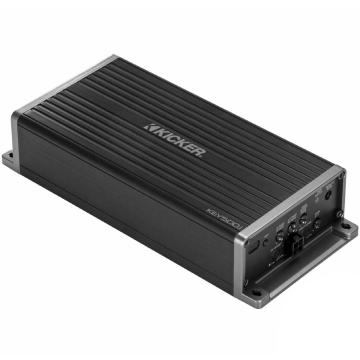
Kicker KEY500.1 (47KEY500.1)
500W RMS KEY Series Monoblock Smart Amplifier with Automatic EQ and Processor
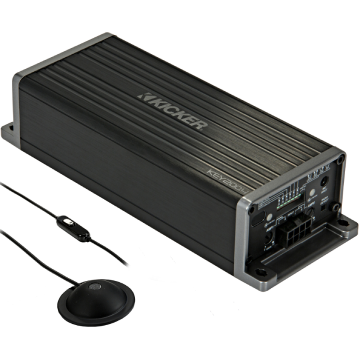
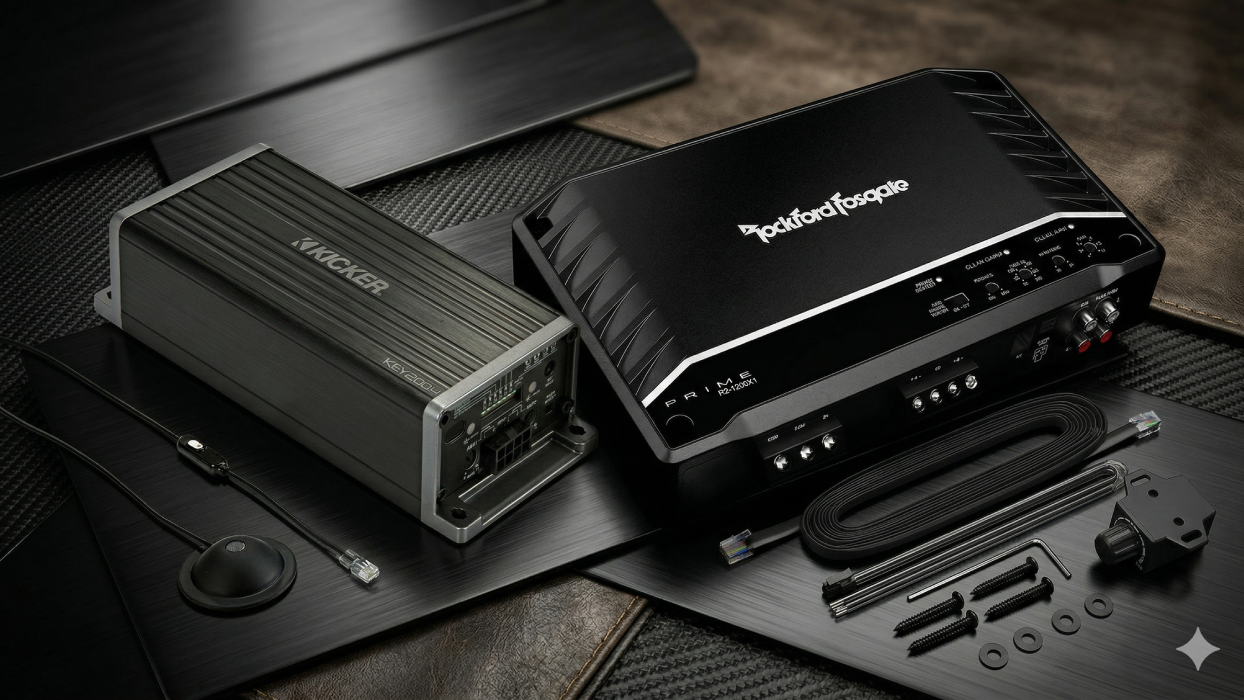
Kicker KEY200.4 (47KEY2004)
200W RMS KEY Series 4-Channel Smart Amplifier with Automatic EQ and Processor
Rockford’s Long-Term Advantage: Service Infrastructure and Setup Guardrails
Rockford Fosgate tends to age well in the real world because it supports ownership friction points that show up later, like replacing a lost bass knob or a damaged harness.
Rockford offers replacement components such as harnesses, bass knobs, and brackets. That matters because five years in, the amp might still be fine, but an accessory failure can force a full replacement if parts don’t exist.
Rockford also leans into setup guardrails like CLEAN, which is designed to help users identify clipping at the input and output during level setting. This tends to reduce the odds that the system is tuned into long-term stress from the start.
Update Timeline and OS Dependency
Sometimes, as your phone continues to get updates, the device can get left behind. This can cause issues where an old device isn’t compatible with a newer phone.
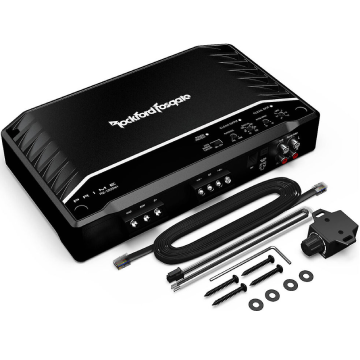
Rockford Fosgate Prime R2 R2-1200X1
1200W RMS Class D Prime Series Monoblock Car Amplifier
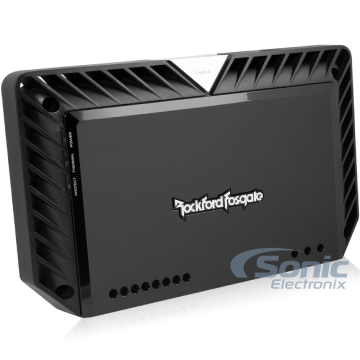
Rockford Fosgate Power T400-4
Stamped steel baskets with reinforced geometry and strong motor support
Compatibility Notes That Matter in Real Ownership
- Kicker IQ-Series firmware updates: Kicker specifically advises connecting a PC directly to the IQ amplifier for firmware updates, not updating through the IQI Bluetooth interface. That’s the kind of detail that reduces “bricked by update” risk over time.
- Rockford RF Connect version history: The iOS version history has active updates into late 2025, which is a positive five-year signal for supported products.
For buyers who want the lowest long-term software risk, the takeaway is simple: amps that don’t require an app to remain functional are easier to live with in year five.
Five-Year Wear-Point Checklist
If you want an amp to last, plan around the boring failures:
- Terminal strain: leave slack and strain relief so vibration doesn’t work the connectors loose
- Remote cable routing: avoid pinch points and sharp bends
- Ground quality: short, solid ground on bare metal reduces noise and shutdown risk
- Airflow: mount on a rigid panel with space around the heat sink
- Electrical headroom: voltage drop causes heat and protect events that compound over time
This checklist does more for longevity than choosing between two reputable brands.
Total Cost of Ownership: The Quiet Difference
A long-lasting amp isn’t only about not failing. It’s also about being maintainable:
- Rockford explicitly supports ordering certain replacement components, which can reduce outcomes where you need to replace the whole system.
- Kicker’s ecosystem support shows up more in accessible accessories like bass level remotes, which helps keep day-to-day usability intact without improvising parts.
Bottom Line
If you want the most predictable five-year experience in a typical daily-driver install, Kicker often has an edge because many of its popular amplifier upgrades can be configured without long-term app dependence, and its DSP pathways include practical wired options.
If you want the best serviceability signal over five years, Rockford Fosgate stands out for documented replacement component availability and setup tools designed to reduce long-term stress from poor gain habits.Either way, the deciding factor is usually the same: a cool-running install with conservative gain structure ages better than a hotter, louder, more aggressive setup, regardless of whose logo is on the heat sink.
About The Authors

Benjie B.
Benjie has been writing automotive content for six years, and he loves the idea of democratizing knowledge through well-written and easy-to-understand content. He particularly enjoys the learning process behind writing and he’s fascinated by how vehicles and how the systems behind them work. Now, his work at Sonic Electronix has exposed him to the rabbit hole that is car audio systems, and he now wants to upgrade his family’s 20-year-old Toyota Yaris with a high-fidelity system someday. He enjoys watching content creators on YouTube, and he’s currently an avid cyclist, training so that his friends don’t leave him behind on group rides.

Norman R.
Norman is a Senior Tech Support and Test Bench Representative for Sonic Electronix, with over 25 years of experience in building car audio systems. He enjoys working with car audio and the opportunity to showcase various products to potential customers. He also finds joy in working with the R&D team, as he gets to see future products and the company’s growth. A hot-rodder and basshead through and through, Norman is extremely passionate about fast, loud, and low cars. In his spare time, he frequently attends car shows and builds big stereos and hot rods. He hopes to one day pass on his skills and knowledge to his son.