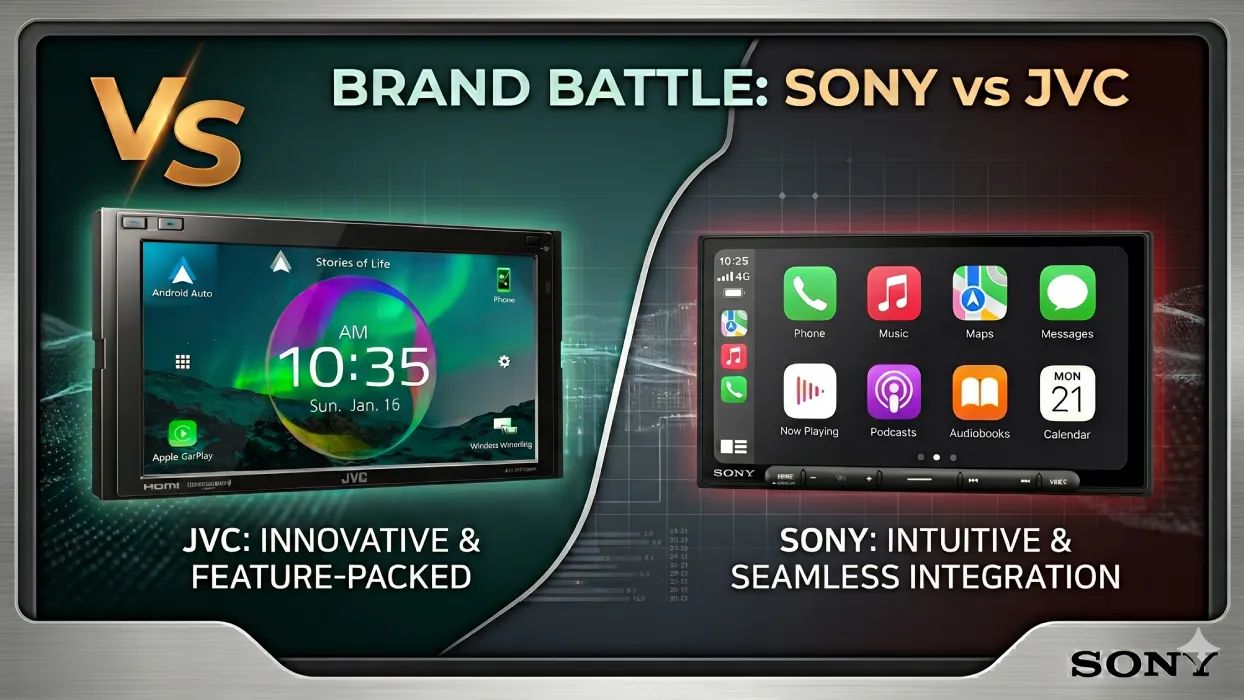
If you’re buying primarily for long-term stability, Sony tends to be the safer reliability bet because its software experience is simpler and reviewers more often describe day-to-day CarPlay and Android Auto behavior as consistent.
JVC can be just as reliable when updated, and it often offers deeper tuning and integration features, but that wider feature set creates more places for phone and firmware drift to show up over time.
Key Points:
- Best set-it-and-forget-it reliability: Sony, because the UI and feature stack are simpler and reviews commonly praise stable CarPlay and Android Auto behavior.
- Best long-term adjustability: JVC, because models like the KW-M785BW feature time alignment and have EQ tools that will still matter in the future.
- Best future-proof signal source: Sony’s 5V RCA preouts can help keep noise down as you add amps later, while JVC’s 4.0V preouts are still strong and well-explained.
- The boring failures still win: USB ports, touchscreens, and install strain replace features as the main reasons people swap units after a few years.
What Reliability Really Means for Modern Head Units
In 2026, head unit reliability isn’t just whether it powers on. It’s whether it keeps behaving as iOS and Android changes through updates and device refreshes. Apple is already on iOS 26.3 as of February 2026, and that pace of OS updates is exactly what exposes marginal wireless handshakes, USB quirks, and firmware gaps.
So the reliability question becomes: which brand keeps the phone link stable, avoids weird bugs after updates, and holds up mechanically when it’s been touched thousands of times?
Sony and JVC Head Units to Shortlist for Long-Term Reliability
If you want a head unit that ages well, prioritize models with stable phone integration and strong output architecture, including higher-voltage preouts (RCA outputs that feed external amps and typically help reduce noise).
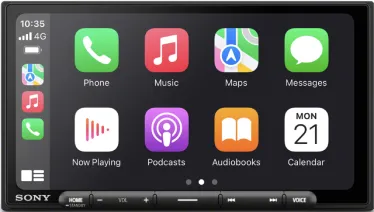
Sony XAV-AX6000 – A strong long-term pick when you want wireless CarPlay plus 5V preouts for a cleaner signal to amps.
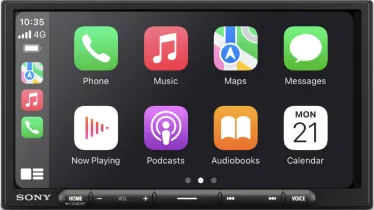
Sony XAV-AX4000 – A solid value pick if you want the Sony UI and wireless CarPlay, but its 2V preouts are better suited to simpler, amp-free or conservative gain builds.
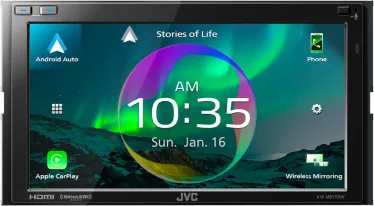
JVC KW-M875BW – The JVC option that stays flexible for future upgrades, with 5V preouts and built-in time alignment for more control as your system grows.
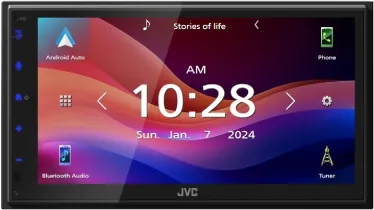
JVC KW-M695BW – A budget-friendly CarPlay/Android Auto platform with 2.5V preouts, which tends to be enough for most mainstream amp integrations.
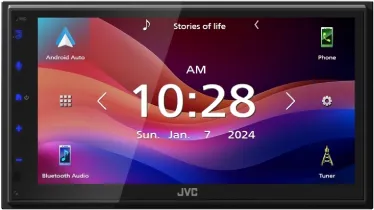
JVC KW-M690BW – Similar overall approach to the M695BW, but with 2.5V preouts and a short chassis that can make older dashes easier to fit cleanly.
Sony vs JVX: Software Support and Longevity
Update Timeline Snapshot
Firmware history varies by model, but these examples show each brand’s general behavior:
Sony (example: XAV-AX4000)
- Last known firmware posting: May 27, 2025 (v3.02.00).
- Notable fixes listed by Sony: wired CarPlay improvements, Maestro climate screen improvements, wireless connection improvements for some Android Auto phones, and a security vulnerability fix.
JVC (example: KW-M785BW)
- System firmware: July 6, 2023 (stability-related improvements are common in these releases).
- Application firmware: November 4, 2024, with fixes that include USB device stability and other operational improvements.
- Ongoing updates exist across the wider JVC multimedia lineup, with newer models receiving updates as recently as February 5, 2026.
What this suggests in practice: Sony updates tend to be fewer but targeted, while JVC’s ecosystem shows frequent update activity across more SKUs, especially as wireless features expand.
Compatibility Notes That Matter More Than Marketing
Wireless Android Auto is the most fragile long-term feature. Sony’s own support notes that after updating a phone to Android 14, wireless Android Auto may stop working on some XAV series units, while wired Android Auto still works.
That risk doesn’t stop at Android 14, either. Community reports show wireless Android Auto problems persisting with newer Android versions on some Sony models, while the same phones work by cable.
For CarPlay and Android Auto in general, Sony also publishes troubleshooting guidance focused on drops and connection failures, which is a useful sign the brand expects and supports real-world edge cases.
App Dependency Risk
A unit ages better when core functions don’t rely on a companion app that might be abandoned.
- Sony’s core experience is mostly head-unit-native once CarPlay or Android Auto is running.
- JVC adds optional app-style features, such as USB mirroring that depends on a specific mirroring app, plus value-add extras like multi-device streaming. If those apps fall behind, the unit still works, but those features can age out first.
Core Features That Still Matter After Five Years
If you fast-forward five years, owners typically care less about novelty UI tricks and more about:
- Stable Bluetooth and phone projection
- Clean USB and phone playback
- Predictable and reliable physical controls
- Tuning tools for future adjustability
This is one reason Sony’s simpler interface often ages well: it has less custom UI that can become slow or annoying, and reviewers commonly describe Sony’s day-to-day operation as smooth and responsive.
JVC’s counterpoint is that its deeper sound tools remain relevant. Time alignment and a real multi-band EQ don’t become obsolete; they become more valuable as you refine your system.
Repairability, Parts Availability, and Total Cost of Ownership
At the five-year mark, reliability becomes: can you keep it alive?
Two practical considerations:
- Proprietary pigtails and accessories (USB extensions, mics, GPS antennas) are long-term liabilities if replacements get scarce. Sony explicitly lists included items like the external mic and USB Type-C extension cable for the AX6000.
- Firmware accessibility matters because keeping compatibility often requires updating. Sony and JVC both publish firmware portals, and both still show active support documentation.
Real-World Feedback from Reviews and Support Threads
People commonly report these Sony Sony reliability pattern (as commonly reported):
- Strong usability and responsive operation, with frequent praise for smooth CarPlay and Android Auto behavior.
- Wireless Android Auto can be the weak link as Android versions change, with Sony acknowledging Android 14 wireless issues on some XAV units.
JVC reliability pattern (as commonly reported):
- Owners often like the feature set and the shallow chassis for easier installs, and firmware updates are clearly segmented and posted for major models.
- Like most wireless-heavy receivers, long-term satisfaction improves when firmware is kept current and install variables are controlled.
The Practical Verdict
- Pick Sony if your definition of reliability is fewer moving parts, a simpler UI, and a track record of reviewers describing stable day-to-day phone projection.
- Pick JVC if your definition of reliability includes long-term tuning control and broad firmware activity across the lineup, and you’re willing to keep firmware current as phones evolve.
If you tell me whether you care more about wireless stability, sound tuning, or screen and control feel, I’ll narrow this down to a few Sony and JVC models that tend to age the best for that priority.
About The Authors

Benjie B.
Benjie has been writing automotive content for six years, and he loves the idea of democratizing knowledge through well-written and easy-to-understand content. He particularly enjoys the learning process behind writing and he’s fascinated by how vehicles and how the systems behind them work. Now, his work at Sonic Electronix has exposed him to the rabbit hole that is car audio systems, and he now wants to upgrade his family’s 20-year-old Toyota Yaris with a high-fidelity system someday. He enjoys watching content creators on YouTube, and he’s currently an avid cyclist, training so that his friends don’t leave him behind on group rides.

Norman R.
Norman is a Senior Tech Support and Test Bench Representative for Sonic Electronix, with over 25 years of experience in building car audio systems. He enjoys working with car audio and the opportunity to showcase various products to potential customers. He also finds joy in working with the R&D team, as he gets to see future products and the company’s growth. A hot-rodder and basshead through and through, Norman is extremely passionate about fast, loud, and low cars. In his spare time, he frequently attends car shows and builds big stereos and hot rods. He hopes to one day pass on his skills and knowledge to his son.