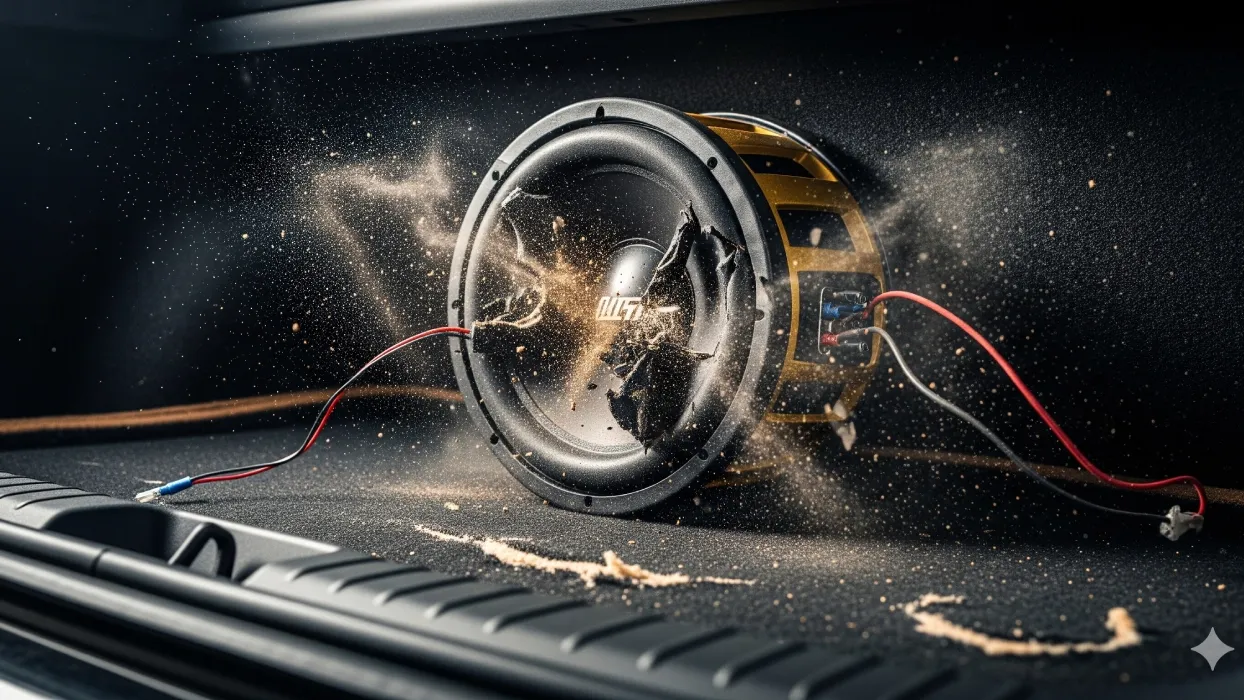
Gain overload forces an amplifier to produce a clipped signal. It flattens the peaks of the signal, creating a waveform that’s similar to a square wave under heavy clipping.
Gain overload produces excessive heat that the voice coil can’t dissipate. This will eventually melt internal components or cause mechanical failure.
Even the most robust subwoofers will fail if the gain is treated as a volume knob rather than a sensitivity match.
Key Insights
- Overloading the gain causes signal clipping, which turns smooth audio waves into damaging square waves.
- Clipping reduces dynamic movement and keeps the cone near its limits longer, trapping heat that eventually melts the internal components.
- Investing in gear with enthusiast-grade engineering, like NVX, provides better materials and higher power handling for the money.
Understanding Gain vs. Volume

A common misconception in car audio is that the gain control on an amplifier acts as a secondary volume knob. In reality, the gain is a sensitivity adjustment used to match the amplifier’s input to the output voltage of your head unit.
When you turn the gain too high, you are asking the amplifier to produce more power than its internal components are capable of delivering. This results in “clipping,” where the peaks and valleys of the audio signal are flattened.
Clipping often occurs when an underpowered amplifier is pushed beyond its limits, not just when gain is set too high.
The Science of Thermal Failure
Subwoofers rely on voice coil movement to stay cool. As the coil moves back and forth through the magnetic gap, air circulates to dissipate heat.
When a signal is clipped, the speaker spends more time near the limits of its excursion. A heavily clipped signal increases RMS power and heat, just as a constant signal would do.
Thermal vs. Mechanical Damage
While heat is the primary killer, gain overload can also lead to mechanical failure.
Thermal failure occurs when the adhesive holding of the voice coil melts, or the copper wire itself burns and shorts out.
Meanwhile, mechanical failure occurs when there’s excessive excursion due to overpowering or improper tuning, potentially tearing the surround or causing the voice coil to strike the back plate of the motor.
How to Properly Set Your Gain
To make the most out of your subwoofer’s service life, here are some things you can use when setting your gain.
- Digital Multimeter (DMM): Calculate the target voltage based on your amplifier’s RMS rating and the impedance of your subwoofers.
- Oscilloscope: This is the most accurate method as it allows you to see the actual sine wave and identify exactly where clipping begins.
- Distortion Detection Tools: Devices like the SMD DD-1 are designed specifically to find the maximum clean output of your head unit and amplifier.
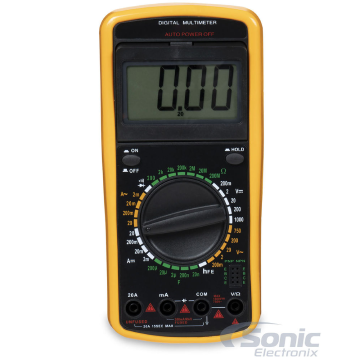
Belva BAMMD3
Automotive 9-Function Digital Multimeter Tester

SMD DD-1+
Distortion Detector/Analyzer
Why Quality Engineering Matters
When comparing NVX to more traditional brands, much of the difference comes down to how the budget is allocated.
NVX focuses on putting more into materials and performance rather than overhead, which can translate into strong value for the price.
For users who plan to run their system hard, that approach can offer a solid balance of output and durability.
About The Authors

Christine F.
Christine is a dedicated content writer with over five years of experience covering a variety of automotive and car audio topics, transforming technical knowledge into compelling and easy-to-understand content. She’s passionate about writing articles that educate, empower, and inspire drivers and audio enthusiasts everywhere. In her free time, she enjoys playing tennis and going on walks with her dog.

Dustin H.
Dustin is passionate about delivering honest car audio advice that serves both first-time buyers and seasoned car audio enthusiasts. A veteran of the car audio industry, he continues to learn about car audio space while building some systems of his own. Outside of his work in car audio, he’s active in his local church and enjoys spending time with family.