Summary
- The best subwoofer for your car depends on available space, power, and listening habits.
- Match the subwoofer’s RMS rating and impedance to your amplifier for clean performance.
- Enclosure type, subwoofer size, and vehicle acoustics determine tone and bass character.
- Electrical capacity and installation options affect what your system can safely handle.
- Choose a balanced setup that complements your car and music style, not just maximum power.
A subwoofer can dramatically improve your car’s sound quality, but finding the right one means understanding how several components work together. The right subwoofer will deliver deep, accurate bass that blends naturally with your speakers. The wrong one can overpower the system, distort easily, or fail to perform as expected. Before buying, consider space, power, enclosure type, and your personal listening preferences. These factors decide how well your subwoofer integrates with the rest of your audio setup.
1. Determine How Much Space You Have
Your car’s available space is the starting point for any subwoofer decision. Compact cars and coupes often have limited trunk or cabin volume, which makes smaller subwoofers or shallow-mount designs more practical. Larger vehicles, such as sedans, SUVs, or trucks, can accommodate bigger enclosures or multiple drivers.
It is important to think beyond the driver size alone. A 12-inch subwoofer, for example, requires a much larger box than a 10-inch model, and the enclosure volume directly affects how it sounds. A subwoofer that is too large for its enclosure can sound restricted, while one in a box that is too big may lose accuracy. Measure your available space carefully before selecting a subwoofer.
2. Match Power Handling and Amplifier Output
Power handling is one of the most critical factors when selecting a subwoofer. Focus on RMS power, which indicates the amount of continuous power the subwoofer can handle, not the inflated “peak” number. The amplifier you choose should deliver an RMS output that matches the subwoofer’s rating. Too little power can cause distortion if the amplifier struggles to drive the sub, while too much power risks damaging the coil and cone.
Also pay attention to impedance, measured in ohms. Most car subwoofers are 2-ohm or 4-ohm models, and some offer dual voice coils for flexible wiring. The goal is to ensure the amplifier operates at a stable load while delivering the rated power. A properly matched amplifier and subwoofer work more efficiently and sound cleaner at all listening levels.
3. Choose the Right Enclosure Type
The subwoofer’s enclosure shapes how it performs as much as the subwoofer itself. Three main types exist: sealed, ported, and bandpass.
| Enclosure Type | Enclosure Effect |
| Sealed enclosures | Airtight boxes that produce clean, accurate bass. They tend to sound tighter and are more forgiving of installation errors, making them ideal for smaller vehicles or music that prioritizes clarity. |
| Ported enclosures | Has a tuned vent that increases efficiency and output. They play louder at lower frequencies but require more space and precise tuning. These are best for users who want deep, powerful bass. |
| Bandpass enclosures | Combines sealed and ported sections to focus on specific frequency ranges. They produce strong output but are harder to design and tune correctly, so they are best for specialized setups. |
Choosing the right box ensures that your subwoofer performs to its potential and suits your preferred sound signature.
4. Pick the Correct Subwoofer Size for Your Music and Vehicle
Subwoofer size plays a major role in how your system sounds, but bigger is not always better.
- 8-inch and 10-inch subwoofers are compact and quick, offering tight and responsive bass that suits rock, pop, and acoustic genres.
- 12-inch subwoofers deliver a good balance of depth and accuracy, fitting most musical styles.
- 15-inch subwoofers focus on maximum low-frequency extension, ideal for hip-hop, R&B, and electronic music where strong bass presence is essential.
Your vehicle’s cabin size also influences how each subwoofer performs. Small cars may sound “bass-heavy” with larger subs because of cabin gain, while bigger vehicles benefit from the deeper reach of a larger driver.
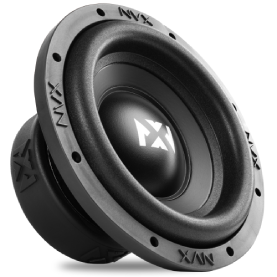
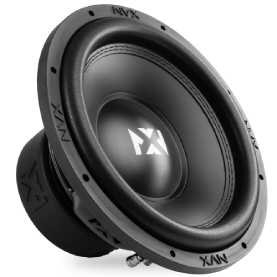
Find the Right NVX Car Subwoofer Size for Your Setup

5. Check Your Electrical System Capacity
Powerful subwoofers demand current from your car’s electrical system. Factory alternators and batteries are often designed for basic audio use, not high-output amplifiers. If you plan to run multiple subwoofers or a large amplifier, consider upgrading your electrical components or installing a capacitor to stabilize voltage.
A healthy electrical system ensures your amplifier delivers consistent power without distortion or dropouts. It also protects sensitive components and prolongs the life of your audio equipment.
6. Tune for Balance, Not Just Power
Even the most powerful subwoofer will sound poor if it is not tuned correctly. Proper crossover settings, gain adjustment, and time alignment ensure the subwoofer blends seamlessly with your door speakers. The goal is to add depth, not overwhelm the mix. A well-tuned subwoofer provides warmth, impact, and realism without masking vocals or instruments.
If your system sounds unbalanced or distorted, the problem is often tuning, not hardware. Take time to adjust or consult an experienced installer to get the most from your setup.
Final Thoughts
Choosing the best subwoofer for your car is about more than size or power numbers. The ideal subwoofer fits your space, matches your amplifier, and complements the kind of music you love. A smaller, well-tuned setup often sounds better than a large system that is mismatched or poorly installed.
When everything is correctly balanced – from amplifier power to enclosure design – the result is clean, controlled bass that makes your music come alive.
About The Authors

Benjie B.
Benjie has been writing automotive content for six years, and he loves the idea of democratizing knowledge through well-written and easy-to-understand content. He particularly enjoys the learning process behind writing and he’s fascinated by how vehicles and how the systems behind them work. Now, his work at Sonic Electronix has exposed him to the rabbit hole that is car audio systems, and he now wants to upgrade his family’s 20-year-old Toyota Yaris with a high-fidelity system someday. He enjoys watching content creators on YouTube, and he’s currently an avid cyclist, training so that his friends don’t leave him behind on group rides.

Hunter V.
Hunter is a Tech Support Lead at Sonic Electronix who also works with the company’s marketing and R&D team. With eight years of experience in the car audio installation space, Hunter likes to make sure that our customers are always happy with their purchase. In his past time, Hunter enjoys building subwoofers and spending time with his kids.