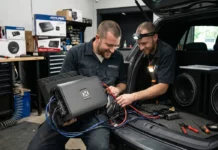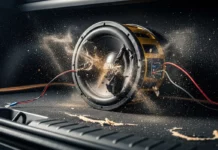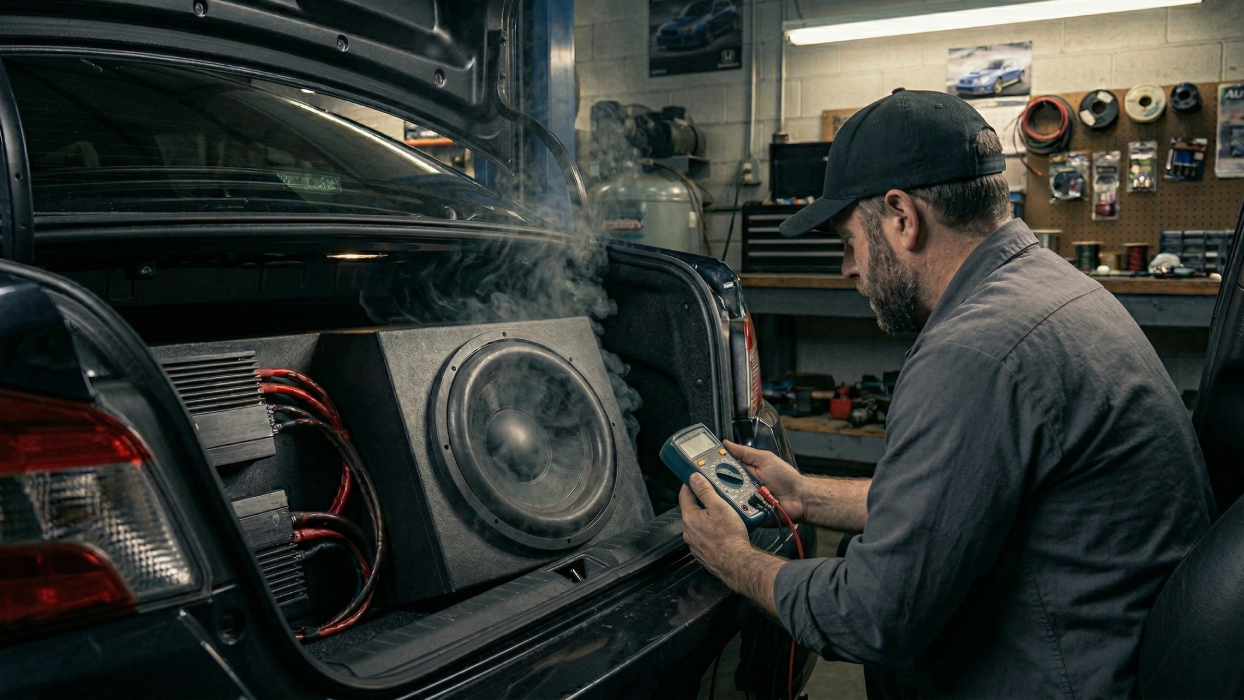
A subwoofer smell is almost always a heat story. Sometimes it’s normal break-in outgassing from adhesives. More often, it’s the voice coil (the motor winding inside the sub) running hot from clipping, too much power, poor enclosure behavior, or wiring and impedance problems.
The goal is to figure out which category you’re in before you keep playing it and turn a warning sign into permanent damage.
What Should I Do Immediately If I Smell Burning?
- Turn the volume down right away and stop bass-heavy playback.
- Let the system cool for at least 15–30 minutes.
- Check for smoke, melting, or hot wiring. If you see any of that, shut the system off and disconnect power until it’s inspected.
This is a very common topic in forum threads, and most occurrences follow the same pattern: if they continue to play after the smell starts, the minor problem will turn into a cooked coil or failed amp.
Is It Normal for a New Subwoofer to Smell?
Sometimes, yes, but only within a narrow window.
A new sub can produce a mild odor because of warm glue or hot electronics. This is because the adhesives and coatings used are experiencing heat for the first time. This comes up often in new-sub smell discussions. This is why people talk about breaking-in their subwoofers so that the smell fades.
If the smell is strong, gets worse quickly, or comes with audible distortion, that’s not normal. Treat it like overheating.
What Does a Burnt Smell Usually Mean in Car Audio?
In car audio, the most common cause is voice coil overheating. The coil’s varnish and nearby adhesives can produce a noticeable odor when they get too hot, and repeated overheating can permanently deform the coil former or weaken glue joints.
A smaller second category is electrical heat from wiring or amplifier problems, but the coil is the usual culprit when the smell appears only when bass is playing.
Can Clipping Make a Subwoofer Smell?
Yes. Clipping is one of the most common ways people overheat subs without realizing it.
Clipping happens when the source unit, processor, or amplifier is pushed beyond what it can cleanly output, flattening the waveform. That creates extra average power and sustained heat in the sub’s voice coil. Rockford Fosgate’s guides describe clipping as signal distortion at the source, preamp, or amplifier when the system is driven past its limits.
A practical way to think about it is this: clipping tends to keep the coil energized harder for longer, so temperature climbs faster than the driver can shed heat.
Can an Underpowered Amp Cause the Smell?
Yes, but not because too little power is dangerous. It’s because underpowered amps get pushed into clipping.
For example, KICKER’s technical references describe the same failure pattern: distortion and clipping raise heat load, which can burn up drivers over time even when the amp’s rated power looks modest.
If you’re smelling heat when you’re near max volume, you’re usually running out of clean headroom somewhere in the signal chain.
Can My Subwoofer Box Cause a Burning Smell?
It can contribute, especially in ported setups.
A sub enclosure controls cone motion. If the box is poorly matched, the driver can be forced into excessive excursion (cone travel), which increases stress and heat. In enclosure discussions, the key point is that the mechanical limit of the driver doesn’t change, but the power required to reach that limit does, depending on the enclosure alignment.
Common box-related contributors include:
- Ported box with no subsonic filter – A subsonic filter is a high-pass filter for the sub channel that reduces ultra-low frequencies below the port tuning region where cone control drops. Without it, the driver can unload and move too far, especially with certain music.
- Major air leaks or loose panels – Leaks reduce control and can create audible stress that encourages you to turn things up.
- Wrong tuning for your use – A box tuned too high can feel loud on some notes but weak on deeper bass, which often leads to turning the system up until it clips.
Box issues don’t usually create odor by themselves. They usually create the conditions that make overheating more likely.
Can Wiring, Impedance, or Electrical Problems Cause the Smell?
Yes. This is the category to take seriously because it can turn into a safety problem.
Watch for:
- Loose power or ground connections heating up under load
- Frayed speaker wire shorting intermittently
- Incorrect final impedance (ohms) stressing the amplifier
- Impedance is the electrical load the amp sees. If you wire too low for what the amp can handle, current rises and heat follows.
If the smell happens even at modest volume, or you notice hot wiring or a hot fuse holder, treat it as an electrical inspection issue first.
How Do I Know If the Subwoofer Is Already Damaged?
A smell that keeps returning is a warning sign, but you can check for mechanical symptoms.
Two common field checks:
- Cone push test: With the system off, press the cone in gently and evenly. Scraping or rubbing can indicate voice coil damage or misalignment.
- Low-level playback test: At low volume, listen for buzzing, rasping, or a scratchy tone that wasn’t there before.
If you’re hearing coil rub or significant distortion at low power, the driver may need reconing or replacement.
Why Does It Smell Even Though My Gain Is Low?
Because gain isn’t volume.
Gain is input sensitivity. You can run low gain and still clip the system if the head unit output is distorted, if a line output converter is being overdriven, or if bass boost and EQ are pushing the signal into clipping upstream. That exact confusion shows up in real troubleshooting threads where the smell persists even with the gain turned down.
How Do I Prevent the Smell From Coming Back?
These are the prevention moves that consistently reduce thermal stress:
- Set gains with a method, not by ear alone – Tools like clip indicators and test-tone workflows are designed to help you avoid clipping at the source and amp output.
- Avoid heavy bass boost as a fix – Boost often creates distortion before it creates usable bass.
- Use appropriate filtering – Low-pass the sub, high-pass door speakers, and use subsonic filtering for ported systems when needed.
- Match RMS power realistically – RMS power handling is the continuous power a sub can manage thermally. If you regularly run beyond that, heat builds even if it “sounds fine” in the moment.
- Make sure the amp has airflow – Heat in the amp can translate into hotter output behavior and earlier protection events.
Is a Burning Smell a Fire Hazard?
It can be, especially if it’s wiring-related or if you’re seeing smoke.
Most modern gear has protection circuits and fusing, but protection doesn’t guarantee you can’t overheat a voice coil or damage wiring. If you smell burning and can’t quickly identify a harmless break-in odor, the safest move is to power down and inspect.
Upgrade to Pro-Grade Bass: High-Performance Subwoofers That Can Handle the Heat
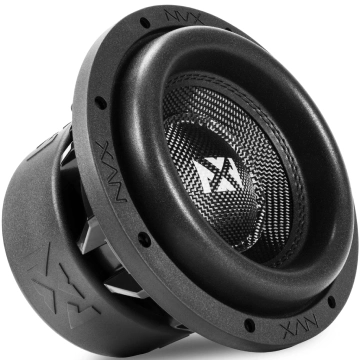
NVX VCW82 Version 3
1300W Peak (650W RMS) 8″ VC-Series v3 Dual 2-Ohm Subwoofer
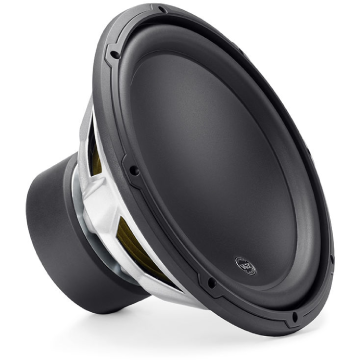
JL Audio 12W3v3-2
500W RMS 12″ W3v3 Series Single 2-ohm Car Subwoofer
About The Authors

Benjie B.
Benjie has been writing automotive content for six years, and he loves the idea of democratizing knowledge through well-written and easy-to-understand content. He particularly enjoys the learning process behind writing and he’s fascinated by how vehicles and how the systems behind them work. Now, his work at Sonic Electronix has exposed him to the rabbit hole that is car audio systems, and he now wants to upgrade his family’s 20-year-old Toyota Yaris with a high-fidelity system someday. He enjoys watching content creators on YouTube, and he’s currently an avid cyclist, training so that his friends don’t leave him behind on group rides.
Norman R.
Norman is a Senior Tech Support and Test Bench Representative for Sonic Electronix, with over 25 years of experience in building car audio systems. He enjoys working with car audio and the opportunity to showcase various products to potential customers. He also finds joy in working with the R&D team, as he gets to see future products and the company’s growth. A hot-rodder and basshead through and through, Norman is extremely passionate about fast, loud, and low cars. In his spare time, he frequently attends car shows and builds big stereos and hot rods. He hopes to one day pass on his skills and knowledge to his son.