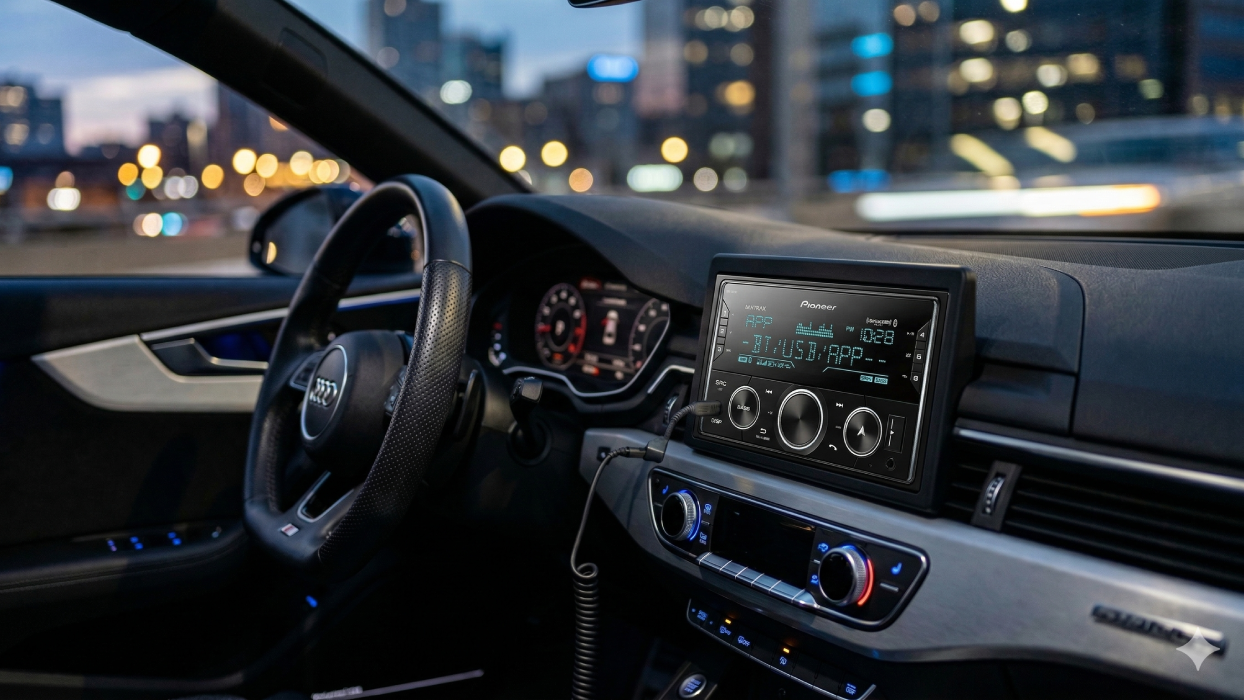
If you want a head unit under $200 that genuinely sounds better than factory, prioritize models with cleaner signal output and real tuning tools, not just more features. In practice, that means usable EQ, proper crossovers, and preamp outputs (preouts), which are low-level RCA outputs for feeding an external amplifier with less noise and better gain control.
The 10 Under-$200 Models That Give You the Cleanest Starting Point
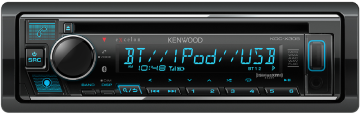
The Audiophile Precision Champion: Kenwood eXcelon KDC-X305
The gold standard for the budget-conscious purist. By offering massive 5.0V preouts and a specialized 13-band EQ, the KDC-X305 ensures an incredibly high signal-to-noise ratio, effectively pushing the noise floor out of audible range before the signal even hits your amplifiers.
The High-Voltage Value King: JVC KD-X480BHS
Engineered for those running external amplification, this unit dominates the sub-$200 bracket with 5V pre-amp outputs. Its integrated Time Alignment and HD Radio tuner make it a formidable “brain” for systems where signal purity and imaging are the top priorities.
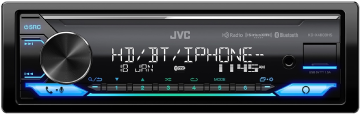
The Reliable High-Output Workhorse: Sony MEX-N5300BT
Sony’s reputation for “Dynamic Reality” amplification holds true here. With consistent 4V preouts and a simplified interface, this unit avoids digital artifacts and provides one of the most stable, uncolored signals available for CD-based enthusiasts.
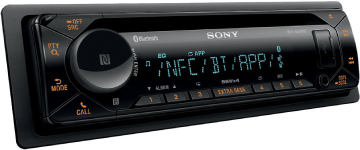
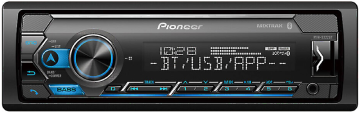
The Modern Interface Powerhouse: Pioneer MVH-S622BS
A practical double-DIN option with 4V preouts and full-size controls that are easy to live with daily.
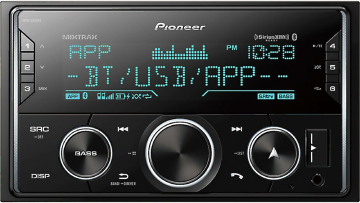
The Feature-Dense Hybrid: JVC KD-T925BTS
Sitting right at the performance ceiling, the T925BTS manages to pack a CD transport, Alexa integration, and 4V preouts into a single chassis. It is the definitive choice for the listener who refuses to compromise on modern connectivity or legacy media.
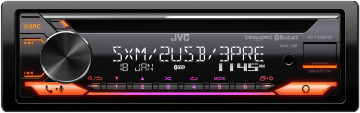
The Entry-Level Standard-Bearer: Pioneer DEH-S4220BT
While priced as an entry-level deck, its sound-shaping capabilities punch well above its weight class. It serves as a stark reminder that even a basic Pioneer unit, with its 13-band EQ and Advanced Sound Retriever, will vastly outperform any factory head unit in clarity and pop.
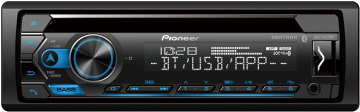
The Purist’s Minimalist Platform: Alpine UTE-73BT
Alpine has long been the “safe bet” for tonal accuracy. The UTE-73BT continues this legacy with a high-contrast display and a high-pass/low-pass crossover network that is more intuitive and precise than almost anything else in this price bracket.
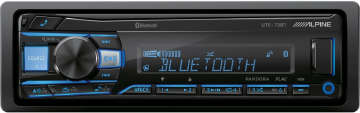
The Ergonomic Command Center: Kenwood DPX305MBT
For older vehicles with massive dash openings, this double-DIN unit offers more than just big buttons. It utilizes a short-chassis design for easier cooling and installation, while still delivering the high-voltage signal stability Kenwood is famous for.
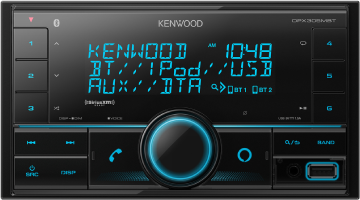
The Streaming Specialist: JVC KD-X380BTS
A high-efficiency mechless receiver designed for the digital age. It prioritizes Bluetooth stability and app control, backed by 4V pre-amp outputs that ensure your Spotify or Tidal streams aren’t bottlenecked by weak hardware.
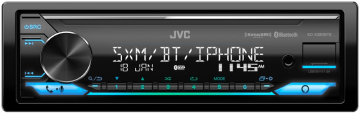
The High-Gain Budget Disruptor: Pioneer MVH-S322BT
The ultimate “sleeper” in the budget category. Despite its low price point, it provides 4V preouts, meaning you can keep your amplifier gains lower and your system noise non-existent—a feat usually reserved for units twice the price.
What Makes a Budget Head Unit Sound Good
Preouts Matter More Than Most Built-In Power Claims
Most head units only make around 18–22 watts RMS per channel on their internal amp, so speaker control is limited once road noise rises. The real advantage comes when you use preouts to feed a 4-channel amp, because you can run lower amplifier gain for the same loudness, which usually reduces hiss and harshness.
If you’re adding an amp, higher-voltage preouts like 4V and 5V can make setup less sensitive. That’s why models like the KDC-X305 and KD-X480BHS tend to work well in upgraded systems.
EQ, Crossovers, and Time Alignment Change the Outcome
A higher band-count EQ is useful because real cars have real peaks and dips. Crossovers matter because door speakers typically sound cleaner when they’re high-passed so they aren’t trying to play deep bass.
Time alignment helps pull the stereo image back toward the center by delaying the closest speakers slightly, which can improve staging even on modest speaker sets.
One Quick Comparison That Helps You Pick Faster
Of course. Comparing these specific models by their “engine room” specs—Pre-amp Voltage, Equalizer Bands, and Media Type—is the best way to see which one actually provides the cleanest foundation for your amplifiers.
Higher pre-amp voltage (measured in Volts) allows you to turn your amplifier’s gain down, which significantly reduces background hiss (floor noise) and distortion.
Head Unit Performance Comparison: The “Clean Ten” (Under $200)
| Model | Pre-amp Voltage | Media Support | Key “Clean Signal” Advantage |
|---|---|---|---|
| Kenwood eXcelon KDC-X305 | 5.0V | CD / BT / USB | Highest voltage in class for zero-noise gain matching. |
| JVC KD-X480BHS | 5.0V | BT / USB / HD Radio | Audiophile voltage + HD Radio signal purity. |
| Sony MEX-N5300BT | 4.0V | CD / BT / USB | High-voltage signal stability for CD purists. |
| Pioneer MVH-S622BS | 4.0V | BT / USB | Professional-grade DSP via Smart Sync App. |
| JVC KD-T925BTS | 4.0V | CD / BT / USB | High-voltage foundation with legacy disc support. |
| Pioneer DEH-S4220BT | 2.0V | CD / BT / USB | Advanced Sound Retriever for compressed audio. |
| Alpine UTE-73BT | 2.0V | BT / USB | High-precision 24-Bit DAC for natural DAC conversion. |
| Kenwood DPX305MBT | 2.5V | BT / USB | Short-chassis design for better heat dissipation. |
| JVC KD-X380BTS | 4.0V | BT / USB | Modern streaming optimization with high-gain outputs. |
| Pioneer MVH-S322BT | 4.0V | BT / USB | Best-in-class signal-to-noise ratio for the price. |
The Clean Way to Choose One
If you’re staying on head-unit power, prioritize usability and EQ. If you’re adding an amplifier, prioritize preout voltage and tuning controls first, then choose the interface you’ll actually want to use every day.
If you tell me whether you’re running an external amp and whether your dash is single-DIN or double-DIN, I’ll narrow this list to the best three fits without changing the under-$200 constraint.
About The Authors

Benjie B.
Benjie has been writing automotive content for six years, and he loves the idea of democratizing knowledge through well-written and easy-to-understand content. He particularly enjoys the learning process behind writing and he’s fascinated by how vehicles and how the systems behind them work. Now, his work at Sonic Electronix has exposed him to the rabbit hole that is car audio systems, and he now wants to upgrade his family’s 20-year-old Toyota Yaris with a high-fidelity system someday. He enjoys watching content creators on YouTube, and he’s currently an avid cyclist, training so that his friends don’t leave him behind on group rides.

Norman R.
Norman is a Senior Tech Support and Test Bench Representative for Sonic Electronix, with over 25 years of experience in building car audio systems. He enjoys working with car audio and the opportunity to showcase various products to potential customers. He also finds joy in working with the R&D team, as he gets to see future products and the company’s growth. A hot-rodder and basshead through and through, Norman is extremely passionate about fast, loud, and low cars. In his spare time, he frequently attends car shows and builds big stereos and hot rods. He hopes to one day pass on his skills and knowledge to his son.