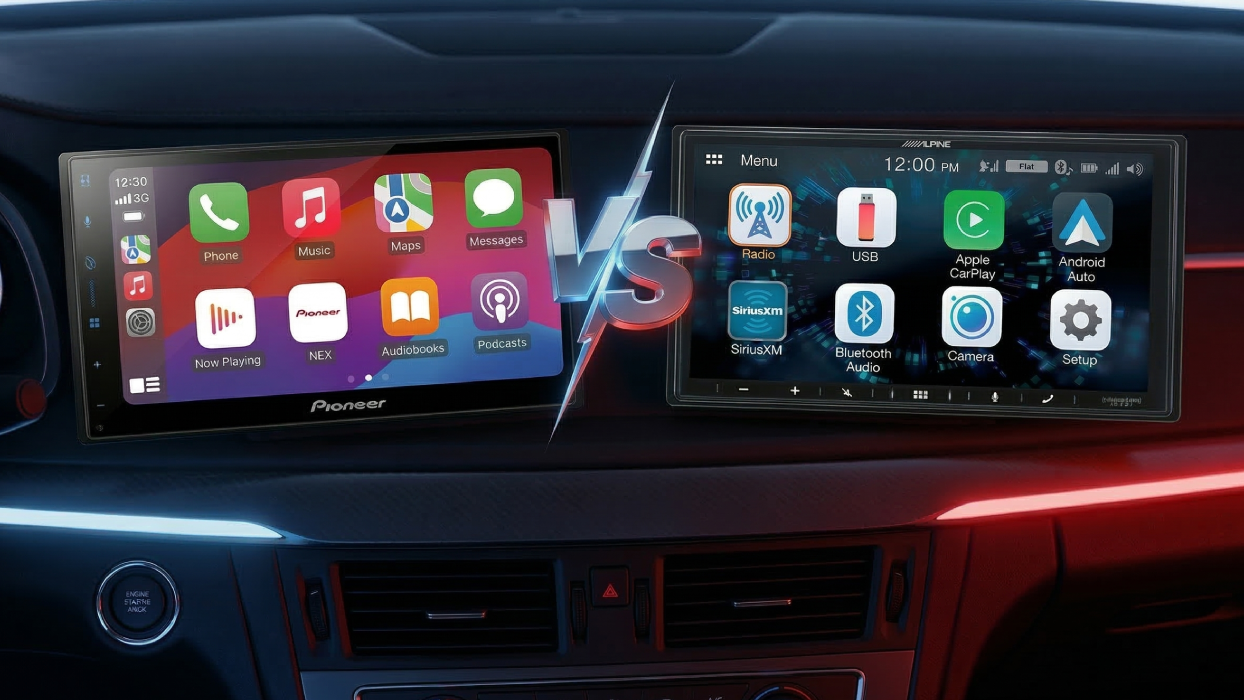
In the 2026 car audio landscape, the definition of “reliability” has shifted from mechanical longevity to ecosystem stability. While both Alpine and Pioneer remain the industry’s “Big Two,” their failure patterns differ significantly.
Alpine remains the premier choice for hardware-centric reliability and consistent UI performance. Pioneer, conversely, offers robust mechanical builds but is more susceptible to software fatigue–or in other words–quirks and glitches stemming from its complex, feature-heavy integration layers.
The Modern Definition of Reliable
In 2026, a head unit is essentially a specialized tablet. Hardware failure (a dead screen or blown internal amp) is rare for both brands. Instead, modern reliability is measured by:
- Handshake Stability: Maintaining a consistent connection with Wireless CarPlay and Android Auto.
- Firmware Longevity: How well the unit handles smartphone OS updates (iOS/Android) three years after purchase.
- UI Responsiveness: The absence of “micro-stutter” or input lag during high-heat operation.
- Thermal Management: The ability to process GPS, music streaming, and voice calls simultaneously without thermal throttling or slowing down because of heat.
Warranty and Serviceability Standards
If you judge reliability by manufacturer backing, the brands are neck-and-neck. Both provide a standard one-year limited warranty on parts and labor.
However, the “Support Gap” appears in the post-warranty phase. Alpine maintains a more streamlined catalog, making replacement parts for older “Halo” and ILX-series units easier to source. Pioneer’s massive, rapidly iterating product line can sometimes make specific proprietary cables or replacement screens for discontinued NEX models harder to find five years down the road.
Alpine: Zero-Quirk Engineering
Alpine’s 2026 reputation is built on predictability. Their engineering philosophy prioritizes a “closed” system architecture. By not trying to be an all-in-one entertainment tablet, Alpine reduces the number of background processes that can cause a system crash.
Strengths in 2026:
- Predictable Cold-Boots: Alpine units consistently boot faster and establish wireless handshakes with less cycling than Pioneer.
- Refined Firmware: Alpine updates are surgical; they target specific communication protocols (like Bluetooth echo cancellation) rather than generic stability patches.
- High-Tolerance Components: Alpine’s internal DACs and pre-amp sections are historically more resilient to clipping damage and voltage fluctuations.
Pioneer: Feature-First Engineering
Pioneer is the industry’s innovator, often being the first to market with new modular formats and OTA (Over-The-Air) update capabilities via CarAVAssist. While the hardware is mechanically sound, the sheer volume of code required to run Pioneer’s feature-dense UI creates more opportunities for software hangups.
Strengths in 2026:
- Evolving Platforms: Pioneer units age well in terms of features because their software is designed to be updated frequently.
- Mechanical Durability: Pioneer’s disc-loading mechanisms and motorized screens (where applicable) remain the gold standard for physical longevity.
- Connectivity Depth: Pioneer offers more ways to integrate with a vehicle’s OBD-II data, though this added complexity is often what leads to glitchy behavior reports.
Comparison Table: Reliability Metrics
| Reliability Metric | Alpine (ILX / Halo Series) | Pioneer (NEX / DMH Series) |
|---|---|---|
| Boot-Up Consistency | Superior: High-speed, stable OS. | Average: Occasional re-handshaking or forced resets needed |
| Software Stability | High: Simple UI, fewer crashes. | Moderate: Feature-heavy, prone to lag. |
| Physical Build | Excellent. | Excellent. |
| Update Frequency | Rare (Only when necessary). | Frequent (New features & fixes). |
| Long-Term Value | Higher (Slower depreciation). | Moderate (Replaced by newer models quickly). |
Why Good Radios Act Bad
Many reliability complaints are actually installation or environmental failures. If your head unit is rebooting or losing connection, check these two 2026-specific culprits before blaming the brand:
- The Data Bottleneck: Using a low-quality USB-C cable for wired connections. Modern head units require high-speed data throughput; a charging-only cable will cause the unit to look like it’s failing.
- Voltage Sag: Modern cars with Start-Stop technology put massive strain on the battery. If your voltage drops below 10.5V during a crank, the head unit’s processor may soft-lock to protect its memory.
The Verdict: Which Should You Trust?
Pick Alpine if:
You view the head unit as a precision tool. You want to set it up once and never have to think about rebooting or updating it again. Alpine is for the user who values a silent, stable, and high-performance background brain for their audio system.
Pick Pioneer if:
You view the head unit as an evolving tech hub. You are comfortable performing occasional firmware updates to gain new features. Pioneer is for the user who wants the latest smartphone integration and doesn’t mind the occasional tech-support moment in exchange for a more powerful interface.
Conclusion for 2026: If your primary goal is a system that just works for 5–10 years without a single hiccup, Alpine holds the edge. If you want the most advanced features and are willing to maintain the software, Pioneer is the industry leader.
Would you like me to find the specific firmware update pages for a particular Alpine or Pioneer model you are considering?
About The Authors

Benjie B.
Benjie has been writing automotive content for six years, and he loves the idea of democratizing knowledge through well-written and easy-to-understand content. He particularly enjoys the learning process behind writing and he’s fascinated by how vehicles and how the systems behind them work. Now, his work at Sonic Electronix has exposed him to the rabbit hole that is car audio systems, and he now wants to upgrade his family’s 20-year-old Toyota Yaris with a high-fidelity system someday. He enjoys watching content creators on YouTube, and he’s currently an avid cyclist, training so that his friends don’t leave him behind on group rides.
Norman R.
Norman is a Senior Tech Support and Test Bench Representative for Sonic Electronix, with over 25 years of experience in building car audio systems. He enjoys working with car audio and the opportunity to showcase various products to potential customers. He also finds joy in working with the R&D team, as he gets to see future products and the company’s growth. A hot-rodder and basshead through and through, Norman is extremely passionate about fast, loud, and low cars. In his spare time, he frequently attends car shows and builds big stereos and hot rods. He hopes to one day pass on his skills and knowledge to his son.