The easiest beginner builds are the ones where the amplifier’s RMS power matches the subwoofer’s RMS rating at the exact ohm load you’ll wire. When those two numbers line up, setup gets simpler, distortion risk drops, and your sub tends to live a longer, cleaner life.
Beginner-Safe Combo Picks That Remove the Guesswork
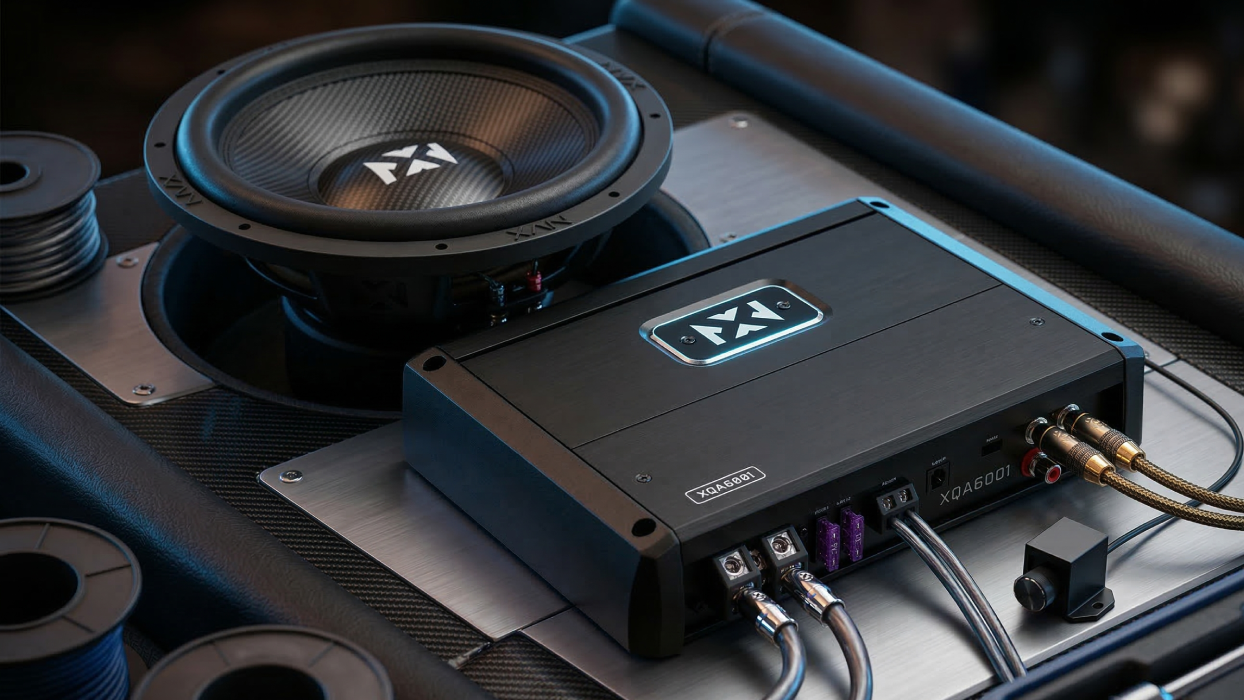
- Best Overall No-Guesswork Match: NVX XQA6001 + NVX VSW122v3 – A clean 600W-to-600W pairing when you wire the dual 2-ohm sub to a 1-ohm final load.
- Best Matched Platform Set: Alpine S2-A60M + Alpine S2-W12D4 – A straightforward 600W amp with a 600W dual 4-ohm sub that’s simple to land at a 2-ohm load.
- Best “Louder Later” Headroom Pick: Kicker CXA800.1 + Kicker CWR124 – Plenty of control and tuning tools, with a sub that’s comfortable in the real-world 500W range when wired to 2 ohms.
- Best Simple, Reliable Daily Driver Combo: Rockford Fosgate R2-500X1 + Rockford Fosgate P2D4-12 – A clean 2-ohm-stable 500W amp paired with a 400W dual 4-ohm sub that’s rated for a 300–500W power window.
- Best for Tight Spaces: Pioneer GM-DX871 + Pioneer TS-A3000LB – A space-saving sealed loaded enclosure (2 ohms, 400W RMS) that pairs naturally with an amp that does 500W at 2 ohms.
Why Beginners Get Stuck With Amp and Sub Pairing
Most beginner issues come from mismatches, not “bad” gear. A subwoofer that’s wired to the wrong impedance (ohm load) can leave an amp underpowered, overheating, or clipping. And a sub that’s fed more power than expected can fail fast if the gain is set like a volume knob.
RMS power is the usable, continuous power rating. It’s the number that should guide pairing, not max or peak ratings. Ohms are the electrical load the amp sees, and that load determines how much RMS power the amp can actually deliver.
Five Amp and Sub Combos That Are Hard to Mess Up
Best Overall No-Guesswork Match: NVX XQA6001 + NVX VSW122v3
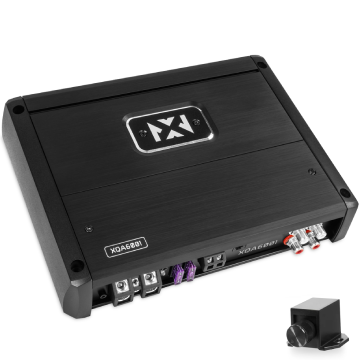
NVX XQA6001
600W RMS XQ-Series SQ Class D 1-Ohm Stable Monoblock Amplifier with X-Boost
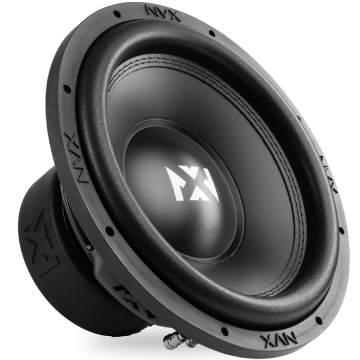
NVX VSW122 Version 3 (VSW122v3)
1200W Peak (600W RMS) 12″ VS-Series v3 Dual 2-Ohm Car Subwoofer
This pairing stays simple because the power match is direct: the XQA6001 is rated for 600W RMS at 1 ohm, and the VSW122v3 is a 600W RMS dual 2-ohm sub that can be wired to a 1-ohm final load.
It’s also a practical beginner setup because you can build it sealed for tighter bass and easier blending, then move ported later if you decide you want more output. If you’re keeping a factory radio, speaker-level inputs are the feature that matters, since they let an amp accept a speaker-wire signal instead of needing RCA signal cables.
Best Matched Platform Set: Alpine S2-A60M + Alpine S2-W12D4
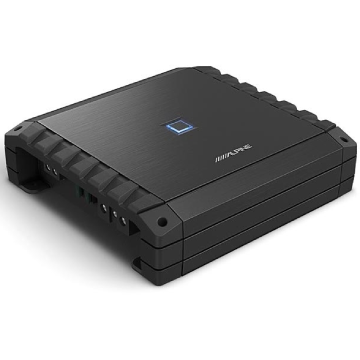
Alpine S2-A60M
600W RMS Class D S-Series Monoblock Car Amplifier
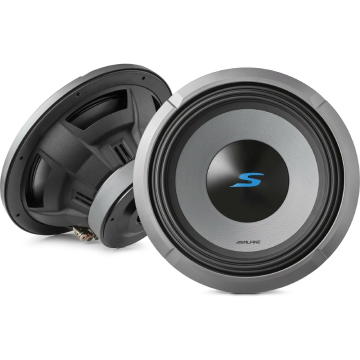
Alpine S2-W12D4
1800W Peak (600W RMS) 12″ S-Series Dual 4-ohm Car Subwoofer
Alpine makes this easy: the S2-A60M is rated at 600W RMS at 2 ohms (and it’s also capable at 1 ohm), and the S2-W12D4 is a 600W RMS dual 4-ohm sub that can be wired to a 2-ohm load.
For beginners, that 2-ohm target is a good balance of strong output and predictable behavior. This amp also supports factory integration via speaker-level inputs, though it typically needs an adapter to interface cleanly.
Best “Louder Later” Headroom Pick: Kicker CXA800.1 + Kicker CWR124
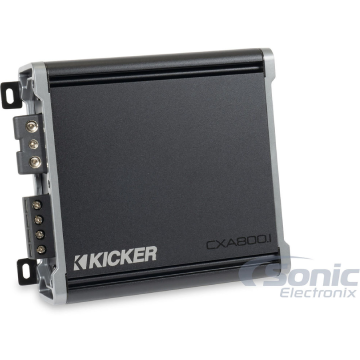
Kicker CXA800.1 (46CXA8001T)
800W RMS Class D CX Series Monoblock Car Amplifier
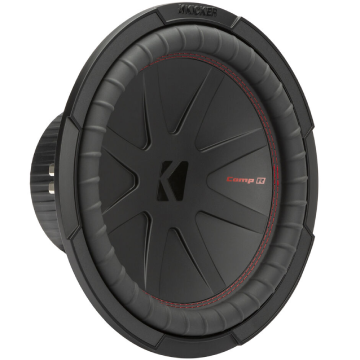
Kicker CWR124 (48CWR124)
1000W Peak (500W RMS) 12” CompR Series Dual 4-ohm Subwoofer
The CXA800.1 delivers 600W RMS at 2 ohms (and 800W RMS at 1 ohm), while the CompR CWR124 is a dual 4-ohm sub rated up to 500W RMS.
For a beginner, the clean way to run this combo is wiring the sub to 2 ohms and treating the extra power as headroom, not a reason to crank gain. The payoff is that the amp isn’t living on the edge, and the system tends to stay cleaner as volume rises.
Speaker-level input support matters for factory systems, but with this model it’s typically adapter-dependent, so it’s something you plan for before install day.
Best Simple, Reliable Daily Driver Combo: Rockford Fosgate R2-500X1 + Rockford Fosgate P2D4-12
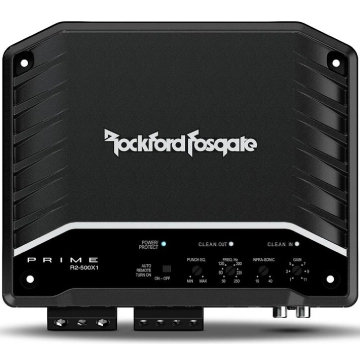
Rockford Fosgate Prime R2 R2-500X1
500W RMS Class D Prime Series Monoblock Car Amplifier
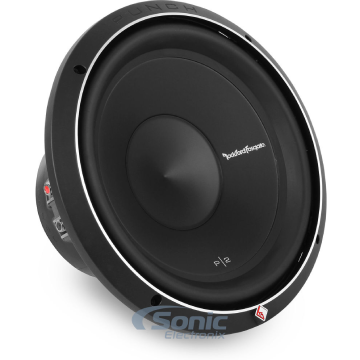
Rockford Fosgate Punch P2 P2D4-12
1000W Peak (500W RMS) 12” CompR Series Dual 4-ohm Subwoofer
The R2-500X1 is a 2-ohm-stable mono amp rated at 500W RMS at 2 ohms.
The P2D4-12 is a dual 4-ohm sub rated at 400W RMS, with a recommended power range of roughly 300–500W RMS.
That pairing is beginner-friendly because it lands in a sane power window without requiring a 1-ohm setup. It’s also forgiving if your enclosure choice isn’t perfect, as long as you use proper low-pass filtering and avoid excessive bass boost.
Best for Tight Spaces: Pioneer GM-DX871 + Pioneer TS-A3000LB
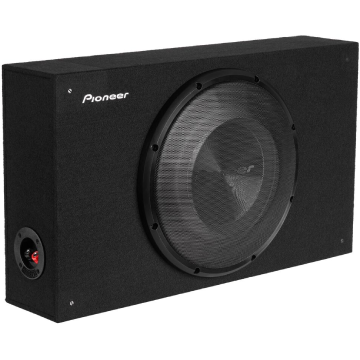
Pioneer GM-DX871
1600W Peak (800W RMS) Class D GM Series Monoblock Car Amplifier with Remote Bass
Pioneer TS-A3000LB
1000W Peak (500W RMS) 12” CompR Series Dual 4-ohm Subwoofer
The GM-DX871 is rated at 500W RMS at 2 ohms and 800W RMS at 1 ohm.
The TS-A3000LB is a sealed, shallow loaded 12-inch enclosure with a 2-ohm final impedance and a 400W RMS rating, which is exactly the kind of packaging that makes sense for trucks and space-limited installs.
This combo works because it minimizes fabrication and fitment surprises. You’re trading maximum output for simplicity, consistent performance, and a cleaner install path.
Match These Three Numbers When Building a System
RMS Power at the Final Ohm Load
An amp’s RMS output changes with impedance. That means you don’t match a sub to an amp in general, you match it to the amp’s RMS rating at the exact load you’ll wire.
If the amp can make more RMS than the sub’s rating, it can still be safe, but only if gain and filtering are set correctly. If the amp is far below the sub’s RMS rating, the system can still work, but beginners often compensate by turning the gain up until the signal clips.
Voice Coil Configuration and Wiring Target
Many subs are DVC (dual voice coil). That’s useful because you can wire the coils in series or parallel to hit a target load.
- A dual 2-ohm sub commonly lands at 1 ohm (parallel) or 4 ohms (series).
- A dual 4-ohm sub commonly lands at 2 ohms (parallel) or 8 ohms (series).
Choosing the right DVC option is how you avoid guesswork and actually get the amp’s rated power.
Enclosure Type and Available Space
The enclosure controls cone motion and shapes the bass character.
- Sealed tends to fit better, plays tighter, and forgives imperfect tuning.
- Ported tends to play louder around its tuned range, but it’s less forgiving if the box and filtering aren’t right.
- Loaded enclosures remove box sizing and wiring uncertainty, which is why they’re often a smart first build.
The Setup Step That Makes or Breaks Any Combo
Even a perfectly matched combo can fail if the amp clips. Clipping is what happens when the amp runs out of voltage swing and flattens the waveform, creating heat in the subwoofer’s voice coil faster than the motor can shed it.
For a beginner build, the safest approach is simple: use conservative gain, set your low-pass filter appropriately, and treat bass boost like a small correction tool, not a substitute for cone area or enclosure choice.
Bottom Line
If you want a beginner system that delivers real bass without guesswork, pick a combo where RMS power and impedance wiring line up on paper before you buy anything. Start sealed if space and predictability matter, go loaded when fabrication isn’t the goal, and treat gain as calibration, not volume.
About The Authors

Benjie B.
Benjie has been writing automotive content for six years, and he loves the idea of democratizing knowledge through well-written and easy-to-understand content. He particularly enjoys the learning process behind writing and he’s fascinated by how vehicles and how the systems behind them work. Now, his work at Sonic Electronix has exposed him to the rabbit hole that is car audio systems, and he now wants to upgrade his family’s 20-year-old Toyota Yaris with a high-fidelity system someday. He enjoys watching content creators on YouTube, and he’s currently an avid cyclist, training so that his friends don’t leave him behind on group rides.
Norman R.
Norman is a Senior Tech Support and Test Bench Representative for Sonic Electronix, with over 25 years of experience in building car audio systems. He enjoys working with car audio and the opportunity to showcase various products to potential customers. He also finds joy in working with the R&D team, as he gets to see future products and the company’s growth. A hot-rodder and basshead through and through, Norman is extremely passionate about fast, loud, and low cars. In his spare time, he frequently attends car shows and builds big stereos and hot rods. He hopes to one day pass on his skills and knowledge to his son.