Aftermarket speakers often sound better when they have an amplifier because most factory head units can’t provide clean power. An amplifier boosts the signal voltage, giving your speaker a signal that’s more powerful, allowing speakers to reach its comfortable operating range.
What You need to Know:
- Factory head units are built for efficiency and cost, not sustained clean output at higher volume.
- When a head unit reaches its limit, it clips. Clipping means the signal gets distorted because the radio can’t produce clean power anymore.
- Aftermarket speakers are usually built to stay controlled and accurate with more power available, so they can sound restrained on head unit power.
- A good amplifier improves sound by adding control and stability, not just loudness. Control means the speaker cone moves more accurately instead of sounding loose or strained.
- If you want the easiest, most consistent upgrade path, powering aftermarket speakers with a 4-channel amp is often the turning point.
Factory Power Reality
Most factory head units include a small internal amplifier designed around low heat, low current draw, and acceptable sound with very efficient factory speakers. That’s why a stock system can seem fine at low volume.
The catch is what happens as you turn it up. The internal amplifier reaches a voltage and current limit quickly, and once it hits that limit, it can’t keep increasing clean output. Instead of sounding fuller, the system starts sounding stressed.
What You Hear When Power Runs Out
When the factory radio gets pushed, the sound usually changes in ways people recognize immediately:
- Bass doesn’t build with volume the way you expect
- Vocals lose separation and start sounding flat
- Treble gets sharp or tiring
- The system sounds louder, but less clear
This is the core reason many speaker swaps disappoint. You installed a better speaker, but the factory head unit is still the bottleneck.
Why Factory Speakers Seem to Work Without an Amp
Factory speakers are engineered to hide the limitations of the head unit. They often prioritize efficiency, meaning they can get reasonably loud on very little power.
That efficiency usually comes with trade-offs:
- less midbass authority
- less detail at higher volume
- less durability when pushed hard
They don’t expose the radio’s weakness because they’re designed around it.
Why Aftermarket Speakers Ask for More
Aftermarket speakers are typically designed to behave better when driven properly. They use stronger motors, more robust coils, and cone designs that stay controlled when power increases.
That’s why aftermarket speakers can sound quieter or less lively on a factory head unit. They’re capable of more, but they’re not being fed enough clean power to show it.
If you’re trying to figure out whether you actually need an amp, sensitivity is a useful clue. Sensitivity is how easily a speaker gets loud with a given amount of power. Lower sensitivity generally means the speaker benefits more from an amplifier.
What an External Amplifier Really Adds
An external amplifier changes the system because it can deliver clean power with more current reserve. Current reserve is the ability to keep pushing power during demanding bass hits without the signal collapsing.
In plain terms, here’s what that does to the sound:
- More midbass authority. Bass notes feel more present instead of thin.
- Cleaner vocals. The speaker isn’t struggling as soon as the volume rises.
- Smoother highs. The top end stays crisp without turning sharp.
- Less distortion at normal listening volume. You don’t have to push the head unit as hard to get satisfying output.
This is why adding an amplifier often creates a bigger improvement than changing speakers twice.
Power Targets That Make Sense
You don’t need extreme power for speakers to sound great. Most aftermarket door speakers respond well when they have enough clean power to stay controlled.
A simple way to think about it:
- If you want a real upgrade in clarity and midbass, a typical 4-channel amp power level around 75–150 watts RMS per channel is often the sweet spot.
- More power can be useful, but only if the speaker and system goals support it.
This is where a dedicated 4-channel amplifier becomes the practical upgrade step instead of chasing a second set of speakers.
NVX Amplifiers That Make Aftermarket Speakers Come Alive
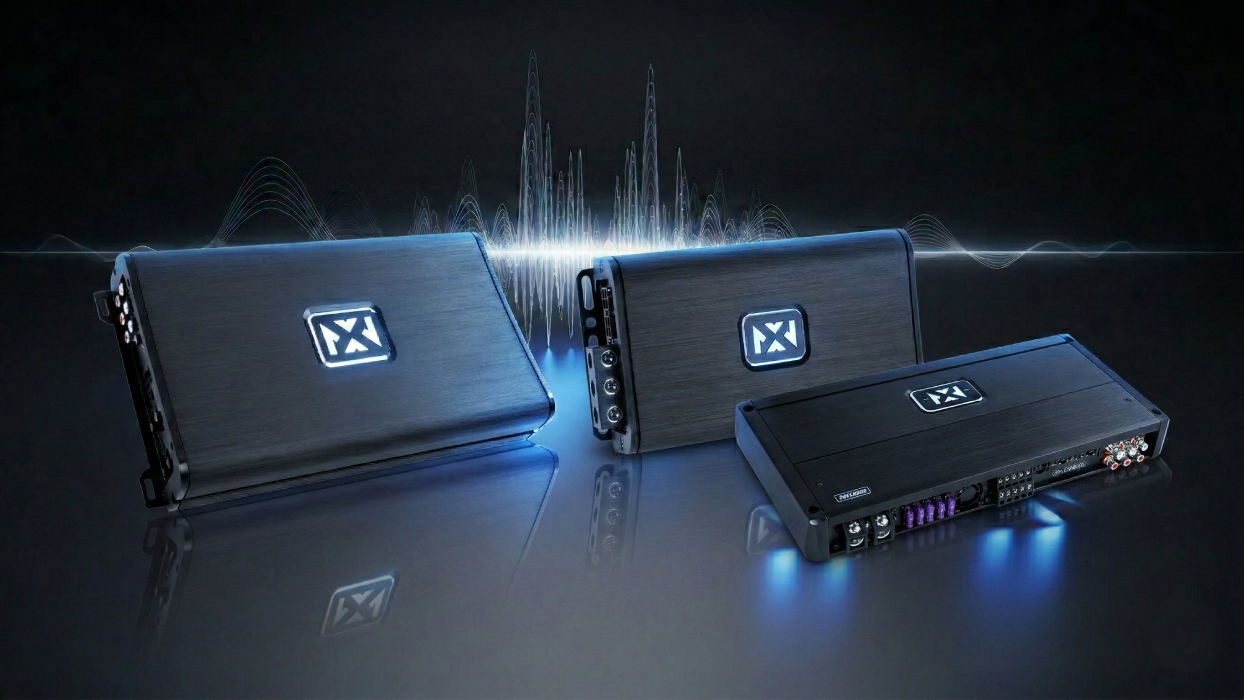
If your goal is to hear what your speakers can actually do, we design our amplifier lineup to cover three common needs: compact installs, daily-driver speaker power, and higher-output full-range builds.
Here are a few proven approaches using NVX options that are widely available through Sonic Electronix.
Compact Power for Tight Spaces
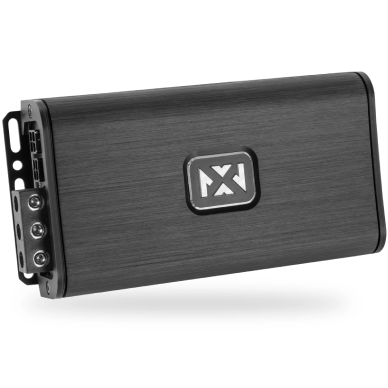
If space is limited but you still want meaningful clean power, compact multi-channel amps can be the difference between a basic upgrade and a system that sounds controlled.
VADM4v2 delivers 80 watts x 4 at 4 ohms
Daily-Driver Speaker Power
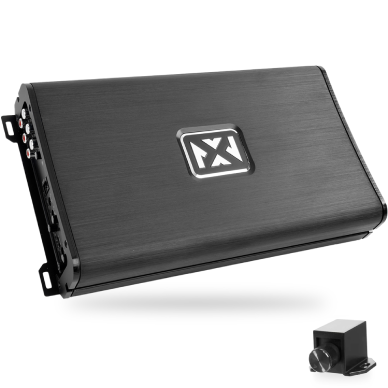
If you want strong speaker output with real headroom, a full-size 4-channel is often the most satisfying choice.
NVX VAD10004v2 delivers 150 watts x 4 at 4 ohms, 250 watts x 4 at 2 ohms, and 500 watts x 2 bridged at 4 ohms. Bridged means combining two channels to power one speaker load with more output capability.
Sound-Quality Leaning Speaker Power With Extra Features
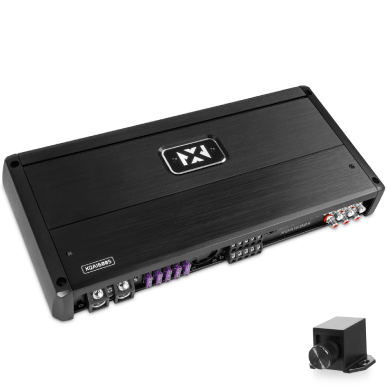
If you want a feature-rich full-range amplifier that’s still built for real output, the XQ-Series 4-channel is a strong match.
- NVX XQA10004 is rated at 150 watts x 4 at 4 ohms, 250 watts x 4 at 2 ohms, and 500 watts x 2 bridged at 4 ohms.
These power levels are enough to change the character of a speaker system without pushing you into an overly complex build.
What Buyers Tend to Notice After Adding an Amp
Feedback patterns are consistent across daily systems:
- Buyers often say the system sounds clearer at the same volume because the head unit isn’t being pushed into distortion.
- Many mention midbass coming back into the system, especially in door speakers that felt thin on factory power.
- People commonly describe the upgrade as sounding more effortless, meaning the system stays composed instead of getting harsh as volume rises.
Effortless is just a shorthand for the system not sounding strained when you turn it up.
Where to Shop NVX Amps and Match the Right Setup
If you want to keep the decision simple, Sonic Electronix makes it easy to compare amplifier categories and power ranges in one place, including dedicated NVX sections for 4-channel amps.
A practical shopping flow is:
- decide whether you’re powering speakers only (4-channel) or speakers plus a sub (5-channel)
- match RMS power to your speakers’ comfort zone
- choose the amp format that fits your available space
Closing Perspective
Aftermarket speakers usually aren’t underperforming because they’re flawed. They’re underperforming because the factory head unit runs out of clean power early. Choose an amplifier that matches your speakers and your listening goals, and you’ll hear the upgrade you expected in the first place: clearer vocals, stronger midbass, and a system that stays smooth as volume rises.
About The Authors

Benjie B.
Benjie has been writing automotive content for six years, and he loves the idea of democratizing knowledge through well-written and easy-to-understand content. He particularly enjoys the learning process behind writing and he’s fascinated by how vehicles and how the systems behind them work. Now, his work at Sonic Electronix has exposed him to the rabbit hole that is car audio systems, and he now wants to upgrade his family’s 20-year-old Toyota Yaris with a high-fidelity system someday. He enjoys watching content creators on YouTube, and he’s currently an avid cyclist, training so that his friends don’t leave him behind on group rides.

Hunter V.
Hunter is a Tech Support Lead at Sonic Electronix who also works with the company’s marketing and R&D team. With eight years of experience in the car audio installation space, Hunter likes to make sure that our customers are always happy with their purchase. In his past time, Hunter enjoys building subwoofers and spending time with his kids.