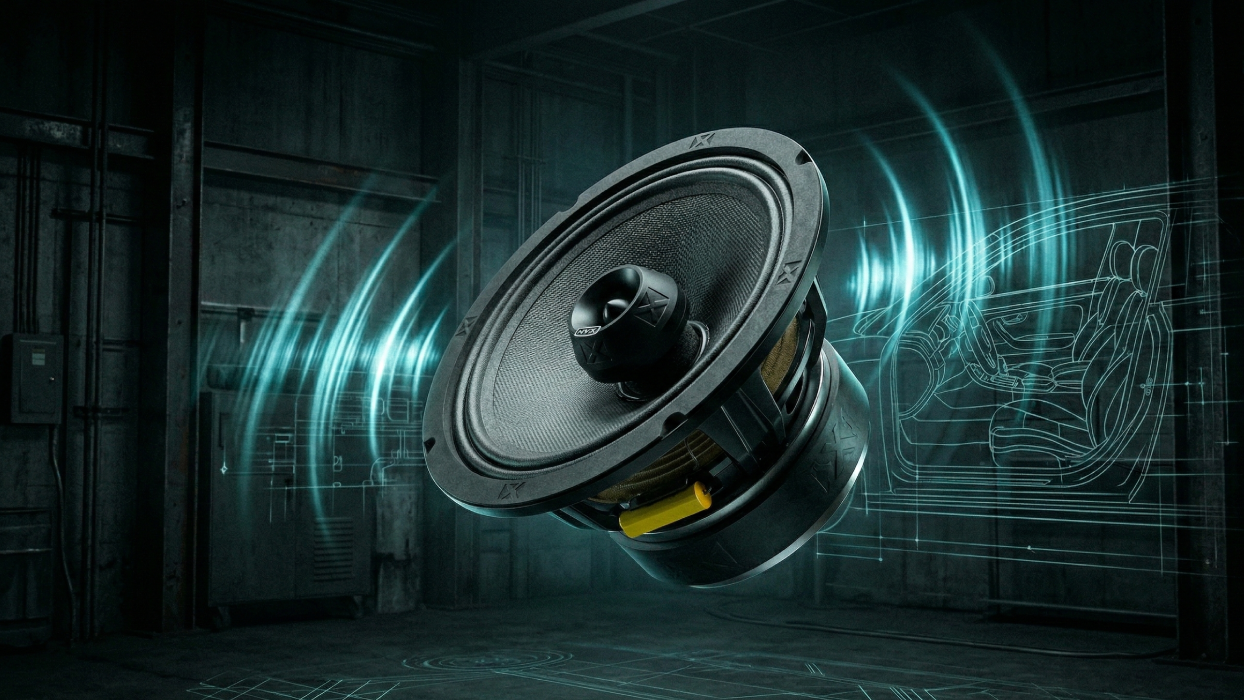
Speakers don’t sound the same in every vehicle because your car’s cabin size, materials, noise, and speaker placement can make the same speakers sound clear in one car and harsh, thin, or uneven in another.
What to Know Before You Choose Speakers
- Your vehicle shapes clarity, midbass, and imaging as much as the speaker does.
- Reflections and cancellations can make certain frequencies jump out or disappear.
- Door speakers depend on the door behaving like a decent enclosure, which many vehicles don’t do by default.
- Road and wind noise mask detail, so clean power and smart speaker choice matter more than lab specs.
Shop Smarter by Matching the Cabin
If you want faster, more predictable results, shop based on how your vehicle behaves, not just watt ratings or brand names. Sonic Electronix makes this easy because you can compare speaker types side by side and narrow down sizes that fit common factory locations. If you’re building around NVX gear, start with a front stage that matches your cabin and power plan, then expand from there.
A practical way to shop is:
- Pick the right speaker type first (coaxial vs. component)
- Pick the right size for factory locations
- Choose power support next (head unit power vs. external amp)
Why Cars Change Speaker Sound
Cars are small, unevenly shaped, and filled with hard surfaces like glass and plastic. Sound reflects off those surfaces almost immediately. Those reflections mix with the direct sound from your speakers, and that mix changes what you hear.
In plain terms, the cabin can:
- boost certain notes and make them sound loud
- cancel certain notes and make them sound missing
- smear detail so vocals feel less separated
- pull the soundstage to one side because the driver sits closer to the left speaker than the right
Cabin Factors That Matter Most
Cabin Size and Shape
Small cabins often make bass and midbass feel stronger because the air volume is limited. Larger cabins can feel less “loud” with the same gear because sound has more space to spread out.
Shape matters because sound bounces. Angled windshields, dashboards, and door panels reflect sound back toward you from different angles. That can create uneven brightness or a vague center image even with good speakers.
Speaker Location and Angle
Speaker placement often matters more than the speaker model.
Most door speakers fire across the cabin, not directly at your ears. That angle changes the high-frequency balance. Off-axis listening usually reduces perceived treble energy, which can make a speaker sound smoother in one vehicle and dull in another.
Imaging is also affected by distance. The left speaker is closer to the driver than the right speaker, which can pull vocals toward the driver-side door unless the system is designed and tuned to account for it.
Imaging means where voices and instruments seem to “sit” across the dash. When it’s good, vocals sound centered. When it’s poor, vocals drift left or feel scattered.
Reflections and Cancellations
Hard surfaces reflect sound. Soft surfaces absorb it. Cars have both, but not evenly.
Reflections can make the top end sound sharp. Cancellations can make midbass disappear. Cancellation happens when reflected sound meets direct sound in a way that reduces a frequency instead of reinforcing it. In plain terms, it’s why one car has punchy midbass with the same speakers, and another sounds hollow.
Door Behavior and Midbass
Doors act like speaker enclosures, even when they’re leaky and flexible. Air leaks through wiring openings and window mechanisms. Thin metal can vibrate. Both reduce midbass efficiency and definition.
Midbass is the “punch zone” where kick drums and bass guitar body live. If the door doesn’t support the speaker well, midbass often feels weak or smeared, even if the speaker is capable.
Noise Floor and Masking
Cars are noisy. Road noise, tire noise, wind, and engine sound raise the noise floor, especially in the midrange. That noise masks detail.
Masking means you don’t lose volume, you lose information. Vocals and texture get harder to hear unless the system has enough clean output and control to stay clear above the noise.
What Changes by Vehicle Type
Sedans
Sedans separate the trunk from the cabin, which changes how subwoofer bass transfers forward. You can still get strong bass, but the path into the cabin is more restricted. Door speakers tend to dominate the experience, and midbass performance varies heavily by door design.
SUVs and Hatchbacks
Shared airspace usually makes bass easier. The subwoofer and cabin “share” the same volume, so low frequencies can feel louder with less power. The trade-off is reflections off rear glass and open cargo layouts, which can create boominess if the system isn’t balanced.
Trucks
Trucks have small cabin volume and strong near-field effects. Near-field means you’re physically close to the speakers, so small placement differences feel bigger. Bass can feel punchy, but door space and mounting depth limits can restrict midbass options.
Power That Helps Speakers Stay Clear
Clean amplifier power often matters more in vehicles than people expect because the cabin is working against you. When you add real power, you’re not just chasing volume. You’re improving control and clarity in a noisy, reflective space.
Control means the speaker cone follows the music more accurately instead of sounding loose or strained when the system gets loud. In a car, that usually translates to:
- clearer vocals at normal driving volume
- stronger midbass without harshness
- less “thin” sound when you turn it up
A practical shopping approach is to choose an amplifier based on what you’re powering:
- A 4-channel amp for front and rear speakers is often the biggest quality jump.
- A 5-channel amp makes sense if you want speakers and a sub in one chassis.
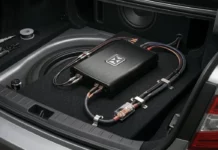
If you’re building around NVX, our multi-channel amps are designed for daily-driver clarity and stable power delivery, which pairs well with real vehicles where noise and reflections fight detail.
Quick Picks by Vehicle Type
These are examples of speaker models that tend to match common cabin behaviors. The goal isn’t that one model is “best.” The goal is choosing a speaker style that behaves predictably in that environment.
| Vehicle Type | Common Challenge | Speaker Style | Example Models |
|---|---|---|---|
| Sedans | Off-axis listening, uneven imaging | Component set for a stronger front stage | Hertz DSK 165.3, Focal RSE-165, Morel Maximo Ultra 602 |
| SUVs and Hatchbacks | Rear reflections, boom risk | Smooth coaxial or well-placed component tweeters | Alpine S-S65, JL Audio C1-650x |
| Trucks | Small cabin, high noise, limited door space | Higher-sensitivity coaxial or compact component option | Rockford Fosgate R165X3, Kicker CS 6.5, Infinity Reference REF-6532ex |
Rules That Keep Expectations Realistic
- Prioritize the front speakers because they define what you actually hear.
- Treat rear speakers as fill. They shouldn’t carry the system’s clarity.
- Expect midbass to be the most sensitive to the vehicle, especially door design and reflections.
- Avoid chasing perfection. The cabin sets the ceiling, and the goal is balanced improvement.
Closing Perspective
Vehicle acoustics explain why a speaker upgrade can feel dramatic in one car and underwhelming in another. If you match your speaker type and power plan to your cabin, the system gets easier to balance and the results become more predictable. Browse your options, compare speaker styles by vehicle needs, and choose the setup that fits your space and listening goals so the upgrade actually sounds like an upgrade.
About The Authors

Benjie B.
Benjie has been writing automotive content for six years, and he loves the idea of democratizing knowledge through well-written and easy-to-understand content. He particularly enjoys the learning process behind writing and he’s fascinated by how vehicles and how the systems behind them work. Now, his work at Sonic Electronix has exposed him to the rabbit hole that is car audio systems, and he now wants to upgrade his family’s 20-year-old Toyota Yaris with a high-fidelity system someday. He enjoys watching content creators on YouTube, and he’s currently an avid cyclist, training so that his friends don’t leave him behind on group rides.

Hunter V.
Hunter is a Tech Support Lead at Sonic Electronix who also works with the company’s marketing and R&D team. With eight years of experience in the car audio installation space, Hunter likes to make sure that our customers are always happy with their purchase. In his past time, Hunter enjoys building subwoofers and spending time with his kids.