A passive crossover is a small speaker circuit made from capacitors, inductors, and sometimes resistors. It sits between the amplifier and speakers and splits the amplified signal so tweeters get highs and woofers get mids and lows, without needing external power.
What To Know Fast
- Each speaker works best in a limited frequency range. Passive crossovers control which frequencies reach each driver.
- They protect tweeters and woofers from frequencies that can cause damage or distortion.
- Passive crossovers work after amplification and don’t need a power source.
- Most component speaker systems rely on passive crossovers to deliver predictable performance.
Component Sets That Include Passive Crossovers
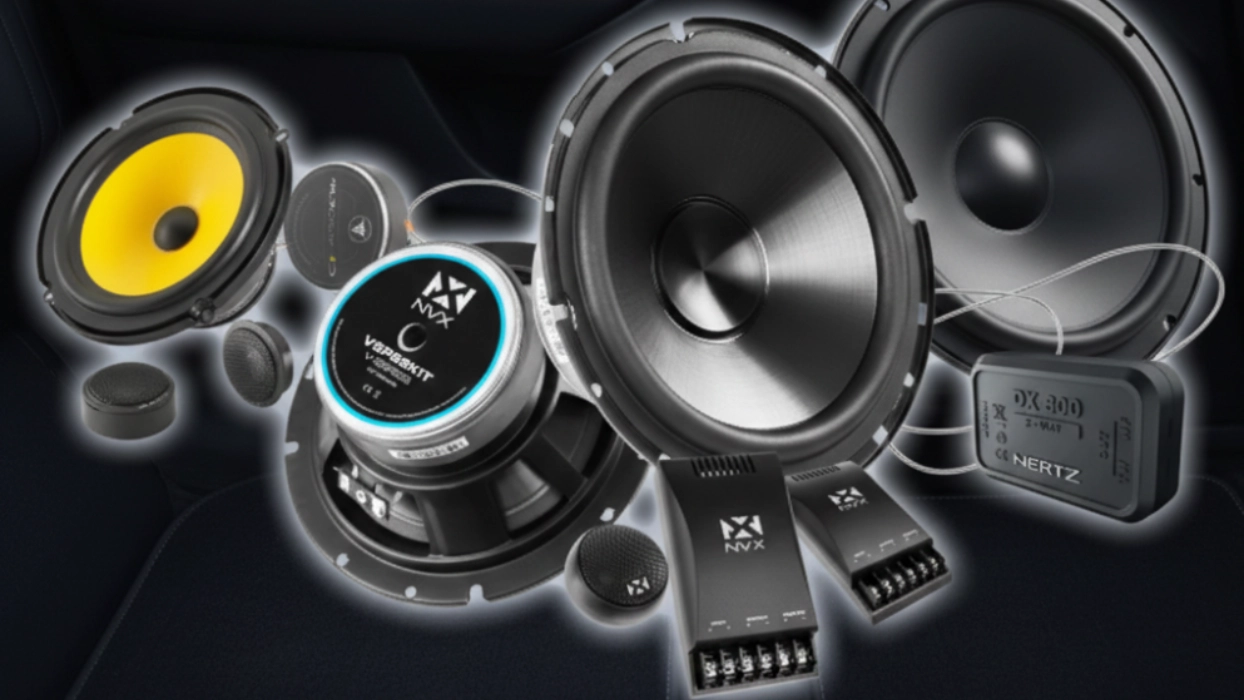
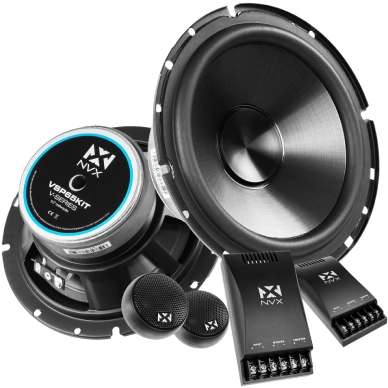
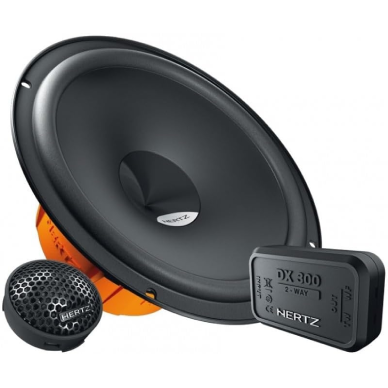
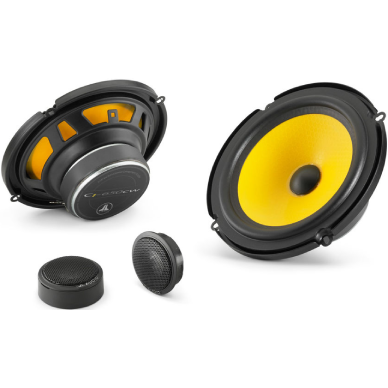
If you’re shopping for component speakers, the simplest path is choosing a set with a matched passive crossover. That crossover is designed around the speaker’s impedance and behavior, so the handoff from woofer to tweeter is more consistent.
In the Sonic Electronix catalog, you’ll commonly see component sets like these that include passive crossovers:
Why Passive Crossovers Matter
Most people never notice a passive crossover once it’s installed, but it has a direct impact on how the system behaves.
Tweeters aren’t built to handle bass. Woofers aren’t built to play clean highs. Without proper filtering, the system can sound strained and drivers can be pushed into frequencies they can’t handle well. A passive crossover prevents that mismatch automatically.
How a Crossover Changes the Sound
A passive crossover usually improves sound in three practical ways:
- Cleaner vocals and detail. The tweeter isn’t fighting bass energy, so it can stay smooth and clear.
- Less distortion. The woofer isn’t trying to reproduce higher frequencies it can’t resolve cleanly.
- More consistent balance. The transition between woofer and tweeter is more controlled, so the system sounds more focused.
Distortion means the speaker is adding unwanted sound that wasn’t in the music. In plain terms, it’s what makes audio feel harsh, fuzzy, or tiring at volume.
What a Passive Crossover Actually Does
A passive crossover filters the signal after it has already been amplified. It doesn’t create a new sound. It simply decides which part of the signal goes to which driver.
Here’s the basic signal path:
| Device | What It Does | What It Does |
|---|---|---|
| Head unit or amplifier | Sends a full-range signal | All frequencies are present |
| Passive crossover | Splits frequencies by driver | Each speaker plays frequencies that it’s designed to play |
| Tweeter and woofer | Reproduce their assigned ranges | Cleaner, safer playback |
Why Speakers Can’t Play Everything
A tweeter uses a small, lightweight dome and voice coil. It’s built for fast movement and fine detail, not big cone travel. If the bass reaches a tweeter, it can overwork and overheat quickly.
A woofer is built for movement and air displacement. When it’s forced to play high frequencies, the cone’s size and mass make it less precise. That often reduces clarity and adds harshness.
Passive crossovers keep each driver working inside a range it can reproduce reliably.
Passive vs. Active Crossovers
The main difference is where the filtering happens.
- Passive crossovers filter after the amplifier. They’re simple, and one amp channel can feed multiple drivers through the crossover network.
- Active crossovers filter before amplification. They’re typically used with DSPs or head units that split frequencies at low signal level, often requiring more amplifier channels and tuning control.
Active systems offer more flexibility, but passive crossovers remain the most practical solution for many daily-driver and OEM-plus builds because they keep the system straightforward and consistent.
Common Types of Passive Filtering
Most passive crossovers use a combination of these filter types:
- High-pass filter: lets high frequencies through and blocks bass. This is mainly used to protect tweeters.
- Low-pass filter: lets low frequencies through and blocks highs. This is mainly used on woofers and midbass drivers.
- Two-way crossover: splits between a woofer and tweeter.
- Three-way crossover: adds a dedicated midrange driver and requires more complex filtering.
High-pass and low-pass are just directional filters. In plain terms, one keeps bass out of a speaker, and the other keeps treble out of a speaker.
Closing Perspective
Passive crossovers don’t add power or change your equipment list, but they often determine whether a component system sounds clean and controlled or strained and uneven. If you want predictable results without extra tuning complexity, choose a component set with a matched passive crossover and build the system around that designed handoff between woofer and tweeter.
About The Authors

Benjie B.
Benjie has been writing automotive content for six years, and he loves the idea of democratizing knowledge through well-written and easy-to-understand content. He particularly enjoys the learning process behind writing and he’s fascinated by how vehicles and how the systems behind them work. Now, his work at Sonic Electronix has exposed him to the rabbit hole that is car audio systems, and he now wants to upgrade his family’s 20-year-old Toyota Yaris with a high-fidelity system someday. He enjoys watching content creators on YouTube, and he’s currently an avid cyclist, training so that his friends don’t leave him behind on group rides.

Hunter V.
Hunter is a Tech Support Lead at Sonic Electronix who also works with the company’s marketing and R&D team. With eight years of experience in the car audio installation space, Hunter likes to make sure that our customers are always happy with their purchase. In his past time, Hunter enjoys building subwoofers and spending time with his kids.