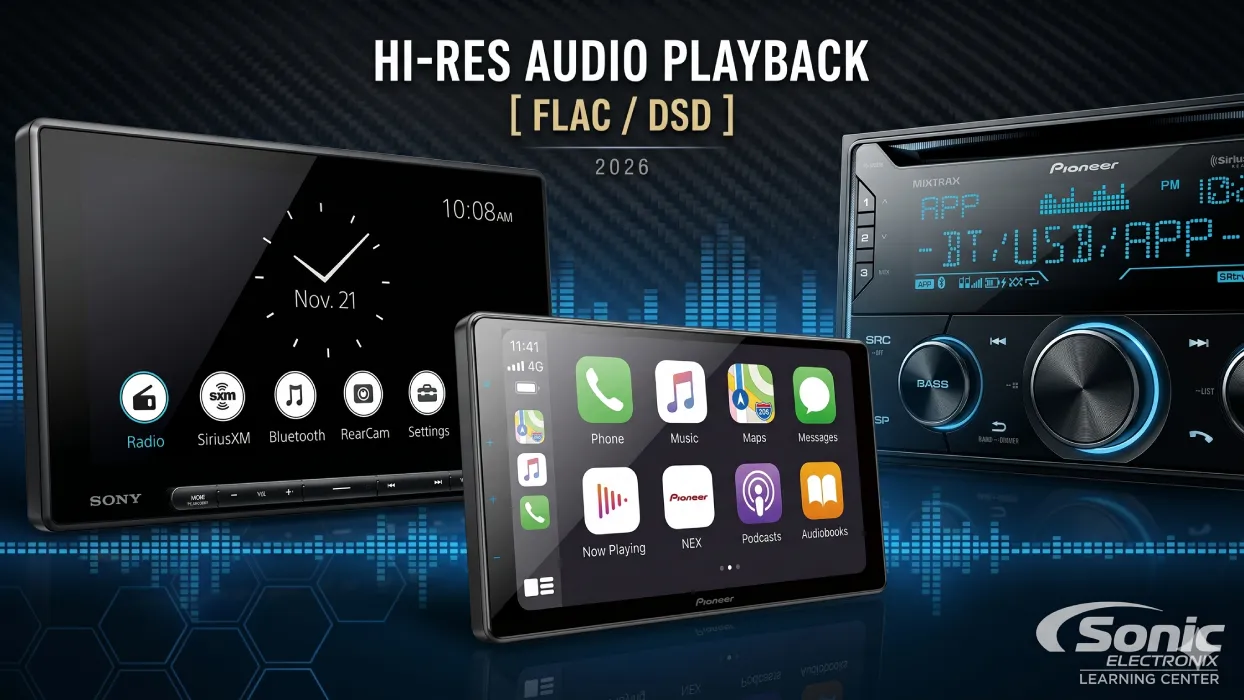
The best head units for high-resolution Free Lossless Audio Codec (FLAC) and Direct Stream Digital (DSD) playback are units like the Sony XAV-AX8500, Pioneer DMH-WC6600NEX, Pioneer DMH-WC5700NEX, and Pioneer FH-S722BS. These models support the following:
- native DSD USB decoding of those file types (FLAC and DSD)
- strong preamp output voltage
- proper tuning control.
These models also support hi-res file formats via USB while also providing the signal integrity and tuning control required for serious car audio systems.
Features That Actually Matter in a Hi-Res Head Unit
If the goal is preserving detail from FLAC or DSD files, these features matter more than branding:
- Native hi-res FLAC and DSD support via USB
- 4-volt or higher preamp outputs for reduced noise
- Time alignment for staging correction
- Parametric or multi-band equalization
- Stable USB file handling for large libraries
Format support alone doesn’t guarantee audible improvement. Signal control does.
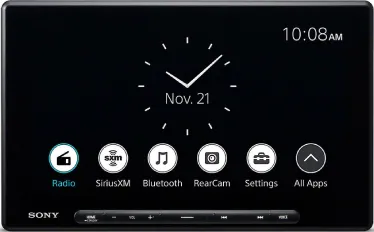
Sony XAV-AX8500 for Native Hi-Res Playback
The Sony XAV-AX8500 supports hi-res FLAC, WAV, and DSD playback via USB. It also provides strong preamp voltage and expanded EQ capability.
This combination makes it suitable for systems where the head unit feeds aftermarket amplifiers directly. Higher preamp voltage allows lower amplifier gain settings, which reduces noise intrusion in detailed playback.
For listeners maintaining a USB-based high-resolution library, this type of architecture avoids unnecessary streaming compression paths.
Pioneer DMH-WC6600NEX for Time Alignment Control
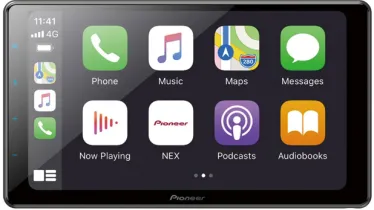
The DMH-WC6600NEX supports hi-res FLAC and DSD playback and includes digital time alignment.
Time alignment corrects the arrival-time difference between speakers positioned at unequal distances from the driver. Without it, the center image pulls toward the nearest speaker.
Pioneer DMH-WC5700NEX for Modern Integration and Hi-Res Support
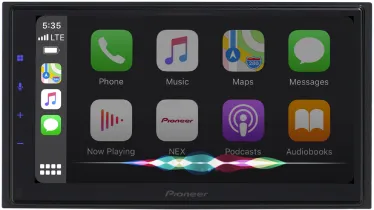
The Pioneer DMH-WC5700NEX supports hi-res FLAC and DSD playback while maintaining modern smartphone integration.
The floating-screen format is practical for vehicles without double-DIN openings, but from a sound perspective, its tuning tools matter more. Multi-band EQ and time alignment allow the system to be calibrated for imaging and tonal accuracy.
Hi-res files benefit most when staging and frequency balance are corrected.
Staging accuracy often produces a larger audible improvement than moving from CD-quality to hi-res audio.
Pioneer FH-S722BS for Non-Touchscreen Hi-Res Builds
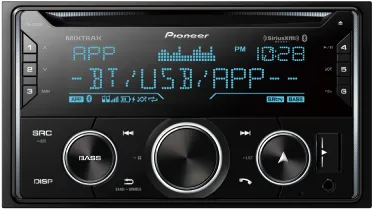
For traditional non-touchscreen installations, the Pioneer FH-S722BS supports hi-res FLAC and DSD playback while providing multi-band EQ and strong preamp outputs.
This makes it a practical option for single-DIN vehicles running external amplification where touchscreen functionality isn’t required.
High-resolution playback is preserved while maintaining clean signal delivery to the amplifier stage.
When a DSP Becomes More Important Than Hi-Res Playback
If the vehicle has factory speaker locations low in doors, strong reflections from glass, or uneven frequency response, a digital signal processor can produce a larger audible improvement than switching file formats.
Hi-res playback removes compression-related limitations. Meanwhile, a DSP corrects acoustic limitations.
When building a system focused on sound quality, both can matter. But control and calibration usually determine whether high-resolution content is truly audible.
Final Perspective on Hi-Res Head Units
A head unit that supports FLAC and DSD playback eliminates a potential signal bottleneck. It does not guarantee better sound by itself.
High-resolution audio reveals system capability. It does not create it.
Choose a head unit that supports your file formats, provides clean preamp output, and allows meaningful tuning. Then ensure the rest of the system is capable of reproducing the detail those files contain.
About The Authors

Benjie B.
Benjie has been writing automotive content for six years, and he loves the idea of democratizing knowledge through well-written and easy-to-understand content. He particularly enjoys the learning process behind writing and he’s fascinated by how vehicles and how the systems behind them work. Now, his work at Sonic Electronix has exposed him to the rabbit hole that is car audio systems, and he now wants to upgrade his family’s 20-year-old Toyota Yaris with a high-fidelity system someday. He enjoys watching content creators on YouTube, and he’s currently an avid cyclist, training so that his friends don’t leave him behind on group rides.
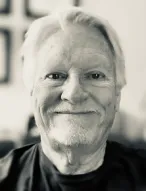
John Haynes
John is an industry veteran, with 35+ years in the mobile electronics industry. Starting as a floor salesperson for Al & Ed's Autosound, he became a top-seller using sales techniques acquired in prior industries. He successfully managed locations, and was the first "non-technician" to be MECP and MECP 1st Class certified. His stores were one of the few in the chain that did truly high-end systems. He left A&E to manage the SoCal territory for Clifford Electronics, then returned to Al & Ed's as the buyer. He quickly became the General Manager for the company, and served in that position for almost 20 years. He tried to retire during COVID, got bored and became the US Sales Manager for an aftermarket auto accessory company until his retirement in 2025.
John enjoys spending time with his wife, two children and three grandchildren and his dog, Kenny. He enjoys playing guitar and banjo, woodworking, photography and volunteers in his local hospital as well as the local baseball/softball complex. Of course, he stays involved in 12-Volt, as it's something that never leaves you once it's in the blood.
"I'm pleased to be working with the Sonic Electronix marketing team," says John. "Sonic is a premier e-tailer, and I'm happy to be involved with them."