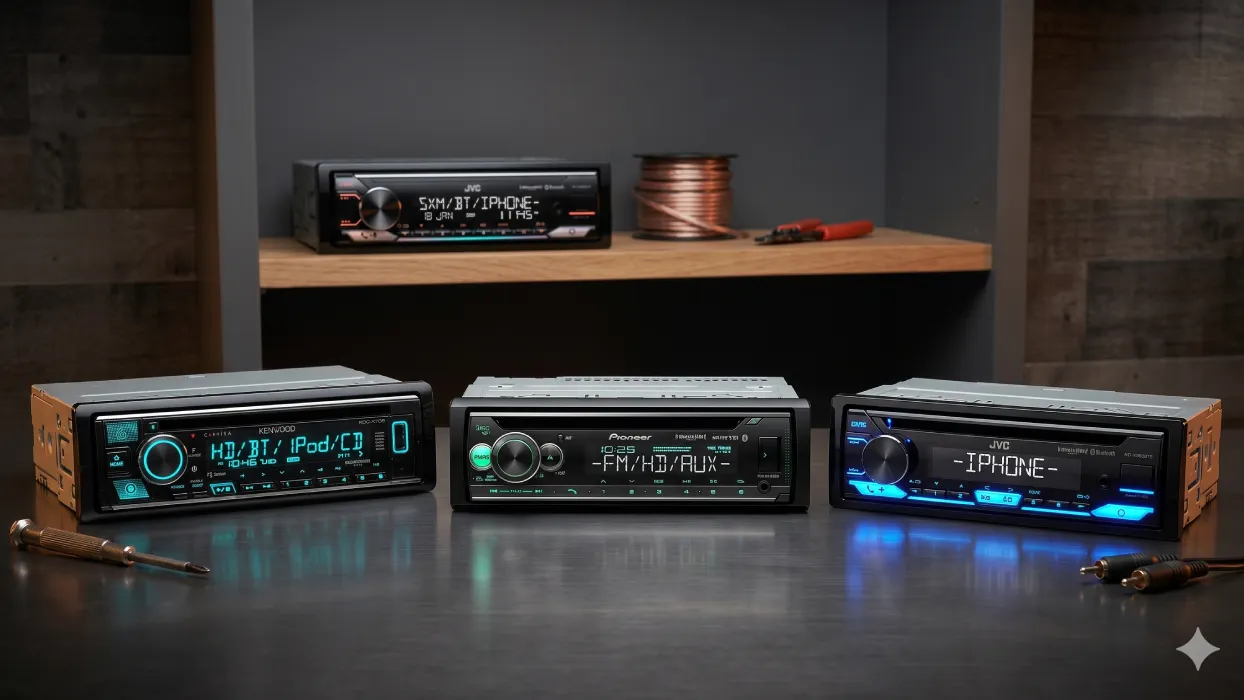
If you’re buying a single-DIN stereo in 2026, the smartest picks are the models that still give you clean preamp output (preout), real crossover/EQ control, and stable Bluetooth. Those three traits matter more than flashy features when your goal is audible sound-quality improvement and easier system tuning.
A clean preamp output is an audio signal that has been amplified from a low-level source (like a microphone or instrument) to a higher line-level signal without introducing significant coloration, distortion, or unwanted noise.
Best Single-DIN Picks That Still Make Sense in 2026
- Best Overall Pick: Kenwood eXcelon KDC-X705 – It’s the most balanced choice when you want strong tuning tools and clean 5V preouts for adding amps and a sub later.
- Best App-Expanded Tuning: Pioneer DEH-S6220BS – It makes sense when you like using a phone app to deepen EQ and control, while still keeping a traditional single-DIN interface.
- Best Value for System Builds: JVC KD-X380BTS – It’s a budget-friendly way to get 4V preouts and practical EQ, which matters once you’re feeding an external amp.
- Best Simple Mechless Choice: Alpine UTE-73BT – It works well when you want straightforward controls and basic tuning, as long as you understand the 2V preout ceiling.
What Makes a Single-DIN Stereo Worth Buying in 2026
Single-DIN still works because the sound-quality upgrade path hasn’t changed: you need a stable source, a predictable signal going into your amplifier or DSP, and tuning tools that let you correct what the car does to the music.
That usually comes down to four things:
- Preamp strength and layout (how many RCA pairs you get, and how much voltage they can swing)
- Real crossover control (high-pass for doors, low-pass for sub, and sane slopes)
- Useful EQ (enough bands to fix cabin peaks, not just bass/mid/treble)
- Low-hassle usability (fast source switching, readable display, reliable Bluetooth)
If you’re amplifying door speakers, higher-voltage preouts usually buy you margin: you can run lower gain at the amp, which often reduces hiss risk and makes gain-setting less touchy.
A Quick Comparison of the Five Picks
| Model | Best For | Preouts | Tuning Focus |
|---|---|---|---|
| Kenwood eXcelon KDC-X705 | Clean signal + long-term system growth | 3 pairs, 5V | 13-band EQ + time alignment |
| Pioneer DEH-S6220BS | Phone-driven control + flexible modes | 3 pairs, 4V | 13-band EQ, Smart Sync expands it |
| JVC KD-X380BTS | Budget-friendly amp-friendly build | 3 pairs, 4V | 13-band EQ, simple layout |
| Alpine UTE-73BT | Simple interface, mechless reliability | 3 pairs, 2V | 3-band parametric EQ |
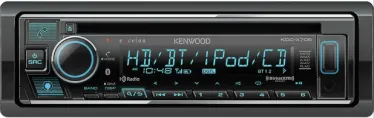
Best Overall Pick: Kenwood eXcelon KDC-X705
The KDC-X705 is the safest do-it-all single-DIN choice because it behaves like the front end of a real system, not just a radio. The combination of tuning depth and 5V preouts matters when you’re feeding a 4-channel amp for doors and a monoblock for a sub.
It’s also a model that people still buy and talk about in 2026 because the core experience holds up: strong customization, time alignment, and the kind of signal output that makes amplifiers easier to integrate cleanly.
If you want a practical starting point for setup, it’s common to see owners discussing crossover points and EQ as the next step after basic installation, which is usually a sign the stereo gives you enough control to matter.
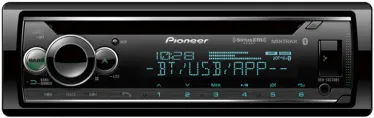
Best App-Expanded Tuning: Pioneer DEH-S6220BS
The DEH-S6220BS is a strong fit when you like the idea of doing more tuning from your phone instead of deep-diving menus on a small display. On paper, it already has a 13-band EQ and flexible crossover modes, and Pioneer’s Smart Sync app is positioned as the way to expand control further.
It also keeps the system-build fundamentals intact: three pairs of preouts and a traditional single-DIN form factor that fits older dashes cleanly.
If your priority is low-noise and a strong signal to aftermarket amps, this is the sort of unit that pairs well with a conservative gain structure and a properly filtered front stage.
Best Value for System Builds: JVC KD-X380BTS
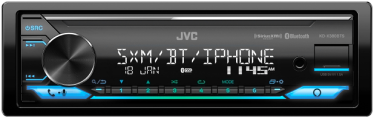
The KD-X380BTS makes sense when the goal is amp-ready fundamentals without paying for features you won’t use. You get 4V preouts and a 13-band EQ, which is enough to build a clean front-stage upgrade with a 4-channel amp and still have tuning leverage.
In reviews, buyers tend to call out sound quality relative to factory systems and the usefulness of the EQ and outputs, which is exactly what you want to hear from a budget single-DIN pick.
This is also the type of stereo that leaves budget headroom for the upgrades that usually change sound the most: better door speakers, proper mounting, and a capable amplifier.
Best Simple Mechless Choice: Alpine UTE-73BT
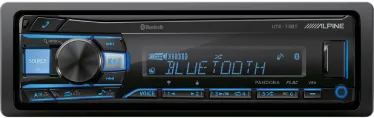
The UTE-73BT is a straightforward, mechless single-DIN that still gets chosen because it’s simple to live with and covers the basics: Bluetooth, USB playback, and a clean interface. It also provides three sets of preouts, but they’re 2V, which is the real constraint to understand before you build around it.
Why does 2V matter? In many amp setups it still works fine, but it can force higher gain at the amplifier for the same loudness, which can raise the odds of audible hiss in quiet passages if the rest of the system isn’t gain-staged carefully.
That limitation shows up in objective measurement discussions too. Audio Science Review’s test notes a relatively high noise floor at 2V output by home-audio standards, which doesn’t automatically ruin it in a car, but it explains why higher-voltage preouts can feel easier to integrate cleanly.
How to Choose Between These Five Without Guessing
If you want the most predictable upgrade path for amplified door speakers, start with preouts + tuning, not wattage claims.
- Pick KDC-X705 if you’re building a front stage with an external amp and want strong control over time alignment and crossover.
- Pick DEH-S6220BS if you like the idea of expanding tuning and control through a phone-based interface.
- Pick KD-X380BTS if you’re trying to keep costs down while staying amp-friendly for a real system later.
- Pick UTE-73BT if you want simple operation and you’re either staying mostly on internal power or you’re comfortable being careful with gain staging.
Closing Perspective
A single-DIN stereo is still worth buying in 2026 when it behaves like a clean, controllable source component. The models above keep earning their spot because they support real system building: predictable signal out, usable tuning, and everyday reliability that doesn’t get in the way of listening.
If you tell me whether you’re running an external amp for the doors (and whether you’ll add a sub), I can point you to the one pick that fits your gain structure and tuning needs with the fewest compromises.
About The Authors

Benjie B.
Benjie has been writing automotive content for six years, and he loves the idea of democratizing knowledge through well-written and easy-to-understand content. He particularly enjoys the learning process behind writing and he’s fascinated by how vehicles and how the systems behind them work. Now, his work at Sonic Electronix has exposed him to the rabbit hole that is car audio systems, and he now wants to upgrade his family’s 20-year-old Toyota Yaris with a high-fidelity system someday. He enjoys watching content creators on YouTube, and he’s currently an avid cyclist, training so that his friends don’t leave him behind on group rides.

Hunter V.
Hunter is a Tech Support Lead at Sonic Electronix who also works with the company’s marketing and R&D team. With eight years of experience in the car audio installation space, Hunter likes to make sure that our customers are always happy with their purchase. In his past time, Hunter enjoys building subwoofers and spending time with his kids.