The Double-DIN stereos that perform best for CarPlay and Android Auto in 2026 usually share the same fundamentals: stable phone connectivity, strong preamp output (preout) voltage for clean amplifier integration, and usable tuning tools like EQ, crossovers, and time alignment.
The preout is the low-level audio signal sent from the stereo to an external amplifier. Higher preout voltage usually allows the amplifier to run lower gain for the same listening level, which can reduce hiss and improve overall system stability. If you’re amplifying your speakers, preout behavior often matters as much as screen size or brand.
Best Picks for 2026 CarPlay and Android Auto Builds
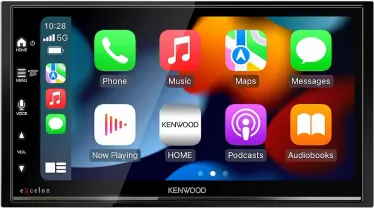
Best Overall Pick: Kenwood eXcelon DMX809S – A balanced wireless CarPlay and Android Auto receiver with 5.0V preouts, plus 13-band EQ and time alignment for real system tuning.
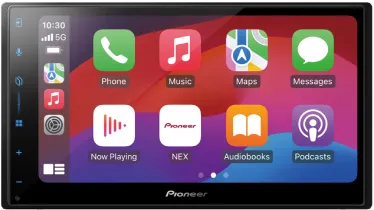
Best Wireless Value: Pioneer DMH-W3050NEX – A feature-dense wireless option with 4V preouts and iDatalink Maestro support for many vehicles.
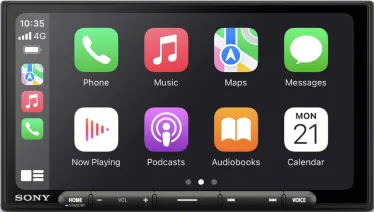
Best for Low-Noise Amp Systems: Sony XAV-AX6000 – A single-DIN chassis design with a Double-DIN screen, 5V preouts, and deeper signal control that helps keep noise down with aftermarket amps.
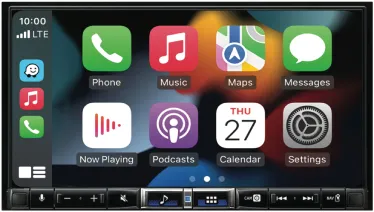
Best for Tuning Depth: Alpine iLX-507 – A wireless CarPlay and Android Auto unit built around sound-quality-oriented tools like parametric EQ and time correction.
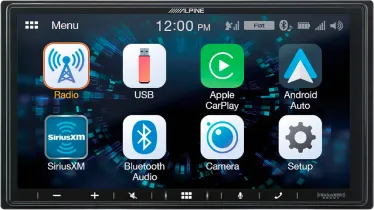
Best for Tight Dashes on a Budget: Alpine iLX-W650 – A shallow-chassis wired CarPlay and Android Auto receiver that fits where deeper radios conflict with ducting and brackets.
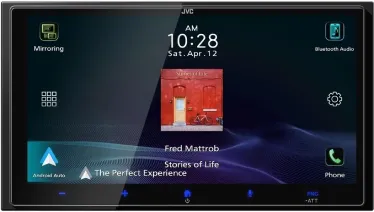
Best Shallow Wireless Choice: JVC KW-M785BW – A Double-DIN shallow-chassis model that keeps wireless phone integration while remaining install-friendly.
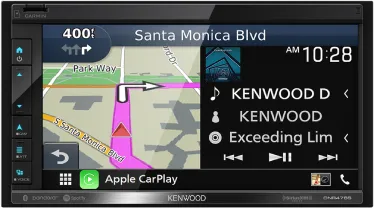
Best When Built-In Navigation Matters: Kenwood DNR476S – A CarPlay and Android Auto receiver with built-in Garmin navigation and strong core audio controls.
Why CarPlay and Android Auto Don’t Tell You Much About Sound Quality
CarPlay and Android Auto primarily change the interface and app access, not the quality of the audio signal leaving the stereo. Sound quality is shaped by the preamp stage and by what signal processing happens before the audio reaches your amplifiers and speakers.
This is why two stereos with identical phone features can behave very differently in amplified systems. Preout voltage, noise behavior, and filter quality usually determine how clean and controlled the system sounds as volume rises.
Wireless CarPlay and Android Auto: Convenience vs Consistency
Wireless connectivity is convenient, especially for short trips or shared vehicles, but stability varies by phone model, vehicle RF environment, and receiver implementation.
In real-world feedback, some models earn praise for fast startup and consistent reconnection, while others see occasional reports of dropouts or delayed pairing. Wired connections remain more predictable and provide guaranteed charging, which is why they still make sense in sound-quality-focused builds.
Tuning Tools That Actually Change What You Hear
If your goal is clearer vocals, steadier imaging, and less harshness at higher volume, three tools usually matter more than any headline feature:
- Equalization (EQ) to correct tonal balance issues caused by door placement and reflections
- Crossovers to keep door speakers out of low-frequency stress and blend subwoofers cleanly
- Time alignment to reduce image shift caused by unequal listening distances in the cabin
Models like the Kenwood eXcelon DMX809S and Sony XAV-AX6000 include these tools at a level that’s meaningful in real vehicles. Alpine’s iLX-507 leans further into fine-grained control, which suits systems where staging and tonal precision matter more than simplicity.
OEM Integration: When iDatalink Maestro Is the Deciding Factor
If you plan to retain steering wheel controls, factory cameras, vehicle settings, or vehicle data displays, iDatalink Maestro compatibility often matters more than screen size.
Many of the stronger 2026 options support Maestro, including Kenwood’s DMX809S, Pioneer’s DMH-W3050NEX, Sony’s XAV-AX6000, and Alpine’s iLX-507. This tends to produce a more cohesive daily-use experience in modern vehicles.
Fitment and Heat Management Still Matter
Remember: A Double-DIN opening doesn’t guarantee Double-DIN depth behind the dash. HVAC ducting, bracing, and harness bulk can create packaging issues.
- Short-chassis designs reduce install compromises and improve airflow
- Shallow models like the Alpine iLX-W650 can be the difference between a clean install and cutting plastic
- Single-DIN chassis designs with Double-DIN screens, like the Sony XAV-AX6000, help in tight dashboards
These factors affect reliability and serviceability long after the novelty of the screen wears off.
Comparing Top Double-DIN Picks
| Model | CarPlay and Android Auto | Preout Voltage | Audio Tools That Matter |
|---|---|---|---|
| Kenwood eXcelon DMX809S | Wireless + Wired | 5.0V | 13-band EQ, time alignment |
| Sony XAV-AX6000 | Wireless + Wired | 5.0V | 14-band EQ, time alignment, 3-way crossover |
| Alpine iLX-507 | Wireless + Wired | 4.0V | Parametric EQ, time correction |
| Pioneer DMH-W3050NEX | Wireless + Wired | 4.0V | 13-band EQ, Maestro support |
| JVC KW-M785BW | Wireless + Wired | 4.0V | 13-band EQ, multi-camera support |
| Alpine iLX-W650 | Wired | 4.0V | Basic parametric EQ, time correction |
| Kenwood DNR476S | Wired | 4.0V | 13-band EQ, time alignment, navigation |
Choosing the Right One for Your Car
If you’re amplifying your speakers, prioritize preout behavior and tuning tools first, then decide on wireless convenience and screen feel. If you’re retaining factory features, prioritize integration support early, because those constraints can’t be fixed with settings later.
The right Double-DIN stereo is the one that fits your dash, integrates cleanly with your vehicle, and gives you enough control to make the system behave predictably at the volume levels you actually use.
About The Authors

Benjie B.
Benjie has been writing automotive content for six years, and he loves the idea of democratizing knowledge through well-written and easy-to-understand content. He particularly enjoys the learning process behind writing and he’s fascinated by how vehicles and how the systems behind them work. Now, his work at Sonic Electronix has exposed him to the rabbit hole that is car audio systems, and he now wants to upgrade his family’s 20-year-old Toyota Yaris with a high-fidelity system someday. He enjoys watching content creators on YouTube, and he’s currently an avid cyclist, training so that his friends don’t leave him behind on group rides.

Hunter V.
Hunter is a Tech Support Lead at Sonic Electronix who also works with the company’s marketing and R&D team. With eight years of experience in the car audio installation space, Hunter likes to make sure that our customers are always happy with their purchase. In his past time, Hunter enjoys building subwoofers and spending time with his kids.