Summary:
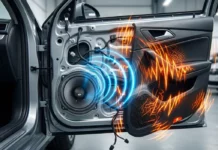
- A subwoofer handles low-frequency sound that smaller speakers cannot reproduce cleanly, restoring the foundation of your music.
- A properly powered subwoofer reduces distortion and allows your door speakers and tweeters to perform more clearly.
- Different music genres rely on low-frequency energy; without a subwoofer, you miss important musical details.
- Even a compact subwoofer can dramatically improve how a system sounds and feels at normal listening levels.
A subwoofer is a dedicated loudspeaker designed to reproduce low-frequency sound. These lower notes require far more air movement than what a typical door speaker or tweeter can provide. Without a subwoofer, the smaller speakers are forced to handle frequencies they were never designed for. This usually leads to distortion, weaker midrange clarity, and early speaker fatigue, especially at high volumes or extended listening times.
The acoustic environments in both cars and marine vessels both lose low-frequency energy quickly. Road noise absorbs bass inside the car, and open-air environments disperse bass almost immediately. A subwoofer restores the foundation of the music so the rest of the system can sound complete and balanced. Even a small, compact subwoofer can transform the listening experience because it relieves smaller speakers of deep bass duties they cannot handle.
Why Bass Matters in Music
Bass is essential. It is a core part of how music is created, recorded, and meant to be heard. Low frequencies shape rhythm, depth, and the emotional weight of a song. They are felt as much as they are heard, and without them, music loses impact and definition. For example, you won’t hear instruments like the bass guitar, kick drums, and the lowest piano keys in their full register.
Small speakers struggle with these frequencies because they cannot move the large volume of air necessary. The result is a sound that feels thin or incomplete. A subwoofer restores this missing layer, giving music the depth and fullness it should have.
Bass also supports the rest of the system. When the subwoofer handles low frequencies, door speakers and tweeters no longer struggle to reproduce notes outside their comfort range. This improves clarity in vocals, midrange instruments, and high-frequency detail. Many listeners are surprised to learn that adding a subwoofer often makes the entire system sound cleaner, not just louder.
Why Subwoofers Are Important for Good Sound in Cars and Boats
Vehicles and marine environments absorb or scatter bass quickly. Road noise masks low frequencies, and open-air marine listening loses bass into the surroundings. A subwoofer compensates for these conditions, delivering consistent low-end impact without forcing the system into distortion.
Adding a subwoofer also reduces the need to turn up the system just to feel the music. With a proper bass foundation, you can listen at moderate volume and still enjoy a full, balanced sound. Many listeners describe the difference as the moment “the music finally makes sense.” That effect comes from hearing the part of the recording that was missing.
Types of Subwoofers and How They Differ
Not all subwoofers are designed for the same goal. Understanding the main categories helps you choose a subwoofer that fits your listening preferences, available space, and system design.
Listening Priority: Sound Quality (SQ) and Sound Pressure Level (SPL) Subwoofers
Sound quality subwoofers are designed for accuracy, control, and musical detail rather than maximum loudness. They focus on clean transient response and low distortion so bass notes sound defined and blend naturally with the rest of the system.
SPL subwoofers are built to produce maximum output and impact. They move large amounts of air and prioritize loudness over fine detail, making them better suited for listeners who want powerful bass presence rather than precision.
Subwoofer Fitment Types
Universal Subwoofers and Vehicle-Specific Subwoofers
Universal subwoofers are designed to work in a wide range of vehicles and enclosures, offering flexibility for custom installs.
Vehicle-specific subwoofers are engineered to fit particular cars or boats, often sacrificing maximum output for convenience, space efficiency, and predictable performance.
Subwoofer Design Types
Powered and Passive Subwoofers
Powered subwoofers include a built-in amplifier and are designed for simple installation and compact systems. Passive subwoofers require an external amplifier, but they offer greater flexibility in power matching, tuning, and overall system performance.
The Crossover: Directing Traffic for Cleaner Sound
The true secret to an improved system is not just the subwoofer itself, but the component that manages it: the crossover.
A crossover is an electronic filter that acts as the traffic cop of your audio system. Its job is to ensure that every speaker in your vehicle receives only the range of frequencies it is designed to handle. Without a crossover, your main door speakers would attempt to play every frequency, from the highest treble to the deepest bass.
When you add a subwoofer, you use the crossover to establish a crossover point—usually between 60 Hz and 100 Hz. At this point, the system dictates:
- Below the Crossover Point: Deep bass frequencies are sent exclusively to the subwoofer, which is designed to move large amounts of air effectively.
- Above the Crossover Point: Midrange, vocals, and high frequencies are sent to the door speakers and tweeters, allowing them to play cleanly.
By implementing this clear separation, you relieve the stress on your smaller speakers entirely. They are no longer straining to produce notes they physically cannot handle. This dedicated filtering significantly reduces distortion, allows the main speakers to use their amplifier power more efficiently, and results in the dramatic clarity improvement that many listeners notice immediately. The entire soundstage becomes cleaner because every speaker is allowed to operate within its comfort zone.Adding a subwoofer is about achieving the full potential of your sound system, ensuring you experience every layer of rhythm and emotional depth the artist intended. By incorporating this dedicated low-frequency driver, you not only gain powerful, distortion-free bass but also elevate the clarity and performance of every other speaker in your vehicle. The result is a balanced, immersive listening experience that truly brings the music to life on the road or the water.
About The Authors

Benjie B.
Benjie has been writing automotive content for six years, and he loves the idea of democratizing knowledge through well-written and easy-to-understand content. He particularly enjoys the learning process behind writing and he’s fascinated by how vehicles and how the systems behind them work. Now, his work at Sonic Electronix has exposed him to the rabbit hole that is car audio systems, and he now wants to upgrade his family’s 20-year-old Toyota Yaris with a high-fidelity system someday. He enjoys watching content creators on YouTube, and he’s currently an avid cyclist, training so that his friends don’t leave him behind on group rides.

Dustin H.
Dustin is passionate about delivering honest car audio advice that serves both first-time buyers and seasoned car audio enthusiasts. A veteran of the car audio industry, he continues to learn about car audio space while building some systems of his own. Outside of his work in car audio, he’s active in his local church and enjoys spending time with family.