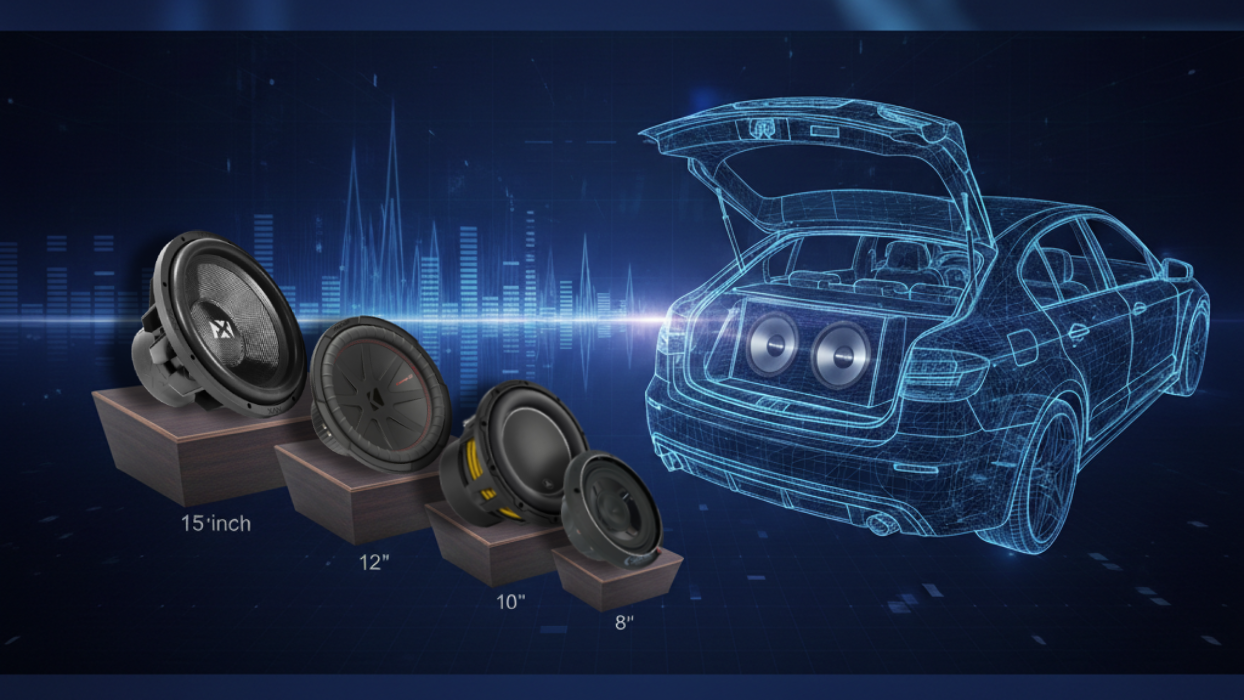
The best subwoofer size for your car depends on space, music preferences, and how much bass you want.
Bigger subwoofers are not always better, and smaller subwoofers can deliver impressive results when paired with the right enclosure and amplifier.
For most drivers, a 10-inch or 12-inch car subwoofer offers the best balance of sound quality, bass depth, and practicality.
Summary
- Generally, larger subwoofers can move more air than smaller ones, resulting in a deeper and louder bass.
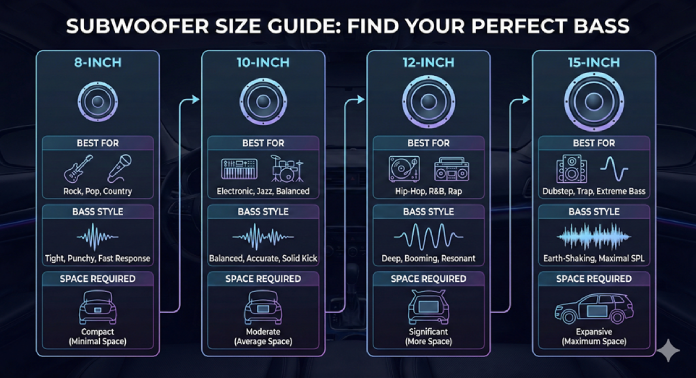
- Smaller vehicles typically work best with 8 or 10-inch subwoofers, while larger vehicles can accommodate 12 or 15-inch subwoofers more easily.
- Always match the amplifier’s RMS power to the subwoofer’s RMS rating to ensure a clean and reliable bass performance and avoid distortion or damage.
Subwoofer Size Guide
Generally, larger subwoofers can move more air than smaller ones, resulting in a deeper and louder bass. Meanwhile, smaller subwoofers are known to deliver a tighter and more controlled bass output.
When choosing a subwoofer size, you’re balancing bass depth and volume, sound accuracy, space, and the amplifier’s power requirements.
Factors to Consider Before Choosing a Subwoofer Size
There are several factors to consider before buying a subwoofer. Here are the most common ones.
Vehicle Size and Available Space
The amount of space in your trunk, cargo area, or cabin will limit your subwoofer options. Always measure your available space before purchasing.
Smaller vehicles typically work best with eight or 10-inch subwoofers, while larger vehicles can accommodate 12 or 15-inch subwoofers more easily.
Also, consider things like trunk or cargo dimensions, seat folding capabilities, spare tire placement, and whether or not you want to maintain cargo usability.
Music Preferences
Your music taste should influence your subwoofer choice. For instance, eight and 10-inch subs are best for rock, jazz, and acoustic music, while 10 and 12-inch subs are better suited for pop, alternative, and mixed music genres.
Desired Bass Level
Decide whether you want a subtle bass enhancement or a strong, physical bass impact.
While light bass improvement pairs well with smaller subwoofers, a strong one generally requires larger subs or multiple installs.
Amplifier Power Requirements
Always match the amplifier’s RMS power to the subwoofer’s RMS rating to ensure a clean and reliable bass performance and avoid distortion or damage.
Subwoofer Enclosure Type
The enclosure plays a major role in how a subwoofer performs. For example, sealed enclosures typically provide a tight and accurate bass while ported ones allow for deeper and louder bass.
If you want maximum bass output with reduced accuracy, you might want to go for bandpass enclosures.
Check out this video for more information on how you can pick out the best subwoofer size for your ride:
About The Authors

Christine F.
Christine is a dedicated content writer with over five years of experience covering a variety of automotive and car audio topics, transforming technical knowledge into compelling and easy-to-understand content. She’s passionate about writing articles that educate, empower, and inspire drivers and audio enthusiasts everywhere. In her free time, she enjoys playing tennis and going on walks with her dog.

Hunter V.
Hunter is a Tech Support Lead at Sonic Electronix who also works with the company’s marketing and R&D team. With eight years of experience in the car audio installation space, Hunter likes to make sure that our customers are always happy with their purchase. In his past time, Hunter enjoys building subwoofers and spending time with his kids.