Summary
- An 8-inch subwoofer is often the entry point to aftermarket bass upgrades, especially for drivers who want better low-end response without sacrificing cargo space.
- A 10-inch subwoofer is widely considered the sweet spot for car audio. It offers a blend of punch, depth, and efficiency that works well in most vehicles and music styles.
- A 12-inch subwoofer is the go-to choice for listeners who want to feel and hear their bass. This size moves significantly more air, resulting in a deeper and louder low-frequency output.
Choosing the right subwoofer size is one of the most important decisions you’ll make when upgrading your car audio system.
Aside from enclosure design and power ratings, subwoofer size directly affects bass depth, loudness, space requirements, and how your system feels overall.
Whether you’re a first-time buyer looking for a clean bass upgrade or an audio enthusiast chasing that deep and hard-hitting low end, understanding the differences between 8, 10, and 12-inch subwoofers will help you make the right choice.
8-Inch Subwoofers: Compact Bass with Precision
An 8-inch subwoofer is often the entry point to aftermarket bass upgrades, especially for drivers who want better low-end response without sacrificing cargo space.
8-inch subs are known to be tight and have a more controlled low-frequency bass instead of a deep rumble.
While these subs won’t shake mirrors, they can significantly enhance factory systems by filling in the low frequencies that stock speakers can’t handle.
Best Use
8-inch subs are a perfect fit for first-time buyers and listeners who want a subtle but clean bass upgrade, drivers with limited trunk or cargo space, and those who prioritize sound quality over loudness.
8-inch subwoofers are usually found in:
- Compact cars
- Sedans with small trunks
- Hybrids and EVs
- Under-seat or stealth installations
What to Expect from an 8-Inch Subwoofer
8-inch subwoofers generally have minimal space requirements, low power demands, and are capable of delivering a fast and clean bass response.
However, expect more limited deep bass output. An 8-inch subwoofer isn’t exactly ideal for bass-heavy music or high-volume listening.
10-Inch Subwoofers: The Perfect Balance
A 10-inch subwoofer is widely considered the sweet spot for car audio. It offers a blend of punch, depth, and efficiency that works well in most vehicles and music styles.
10-inch subs deliver strong low-end extensions with good accuracy. They hit harder than 8-inch subs while remaining controlled and musical. This makes them extremely versatile for everything from hip-hop and EDM to rock and country.
Best Use
This subwoofer is great for car owners who are gunning for a noticeable improvement in their bass, audio enthusiasts seeking balance over extremes, and drivers who are upgrading their factory systems.
10-inch subs are usually found in:
- Sedans
- Coupes
- Crossovers
- Small to mid-size SUVs
What to Expect from a 10-Inch Subwoofer
Expect a more balanced sound quality and output from a 10-inch subwoofer compared to an 8-inch.
This type of subwoofer is also designed to perform in sealed or ported enclosures and usually comes in a wide range of models and price points.
Given its size, however, a 10-inch subwoofer requires more space and has less overall output than a 12-inch subwoofer.
12-Inch Subwoofers: Deep Bass & Maximum Impact
A 12-inch subwoofer is the go-to choice for listeners who want to feel and hear their bass. This size moves significantly more air, resulting in a deeper and louder low-frequency output.
12-inch subs produce a deep, powerful, room-filling bass. They excel at low-frequency extensions and high outputs, making them ideal for bass-heavy genres and high-powered systems.
Best Use
12-inch subwoofers are a popular pick among bass enthusiasts and experienced buyers. They’re also a great buy for listeners who want a strong bass performance.
12-inch subs are usually found in:
- SUVs
- Trucks
- Wagons
- Vehicles with large trunks or cargo areas
What to Expect from a 12-Inch Subwoofer
A deep bass extension, high output potential, and the ability to perform well in ported enclosures are some of the advantages of 12-inch subwoofers.
On the downside, this type requires the most space and has high power demands. The output from a 12-inch subwoofer can be more than what casual listeners need.
Subwoofer Size Chart
For many drivers, a single 10-inch subwoofer or a dual 8-inch setup offers the best compromise between performance and practicality, while a 12-inch subwoofer is ideal for those who prioritize bass impact above everything else.
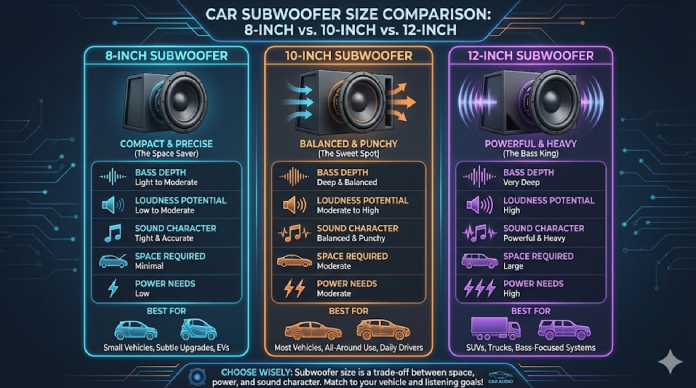
Whether you’re upgrading for the first time or building a more serious system, understanding the strengths of 8”, 10”, and 12” subwoofers ensures you’ll end up with bass you actually enjoy every day.
A larger subwoofer isn’t automatically better. The right choice depends on your vehicle size, available space, and listening goals.
Loudness depends on efficiency, enclosure design, and amplifier power, not just subwoofer size.
About The Authors

Christine F.
Christine is a dedicated content writer with over five years of experience covering a variety of automotive and car audio topics, transforming technical knowledge into compelling and easy-to-understand content. She’s passionate about writing articles that educate, empower, and inspire drivers and audio enthusiasts everywhere. In her free time, she enjoys playing tennis and going on walks with her dog.

Dustin H.
Dustin is passionate about delivering honest car audio advice that serves both first-time buyers and seasoned car audio enthusiasts. A veteran of the car audio industry, he continues to learn about car audio space while building some systems of his own. Outside of his work in car audio, he’s active in his local church and enjoys spending time with family.